

Aristotle was a philosopher shaped by relentless self-reflection, observing life and society with meticulous care—much like Rousseau, Voltaire, and Einstein. One might ask how these thinkers developed into such extraordinary minds. Did they eat a handful of almonds every day, or did they spend most of their time solving complex puzzles? Perhaps that is not the answer. Another natural question for an inquisitive person is whether these individuals were merely knowledgeable or truly wise.
In this article, I will break down these questions and compare them to the educational environment that students in Pakistan experience, while also providing insightful recommendations for the educational trends that stifle critical thinking.
It would be misguided to assume that the philosophers and scientists mentioned earlier possessed innate intellectual superiority or were born with extraordinary cognitive advantages. However, what we can believe with absolute certainty is that their hours of contemplation over natural phenomena, along with their solitude, are what made them such geniuses. They found no value in memorizing and storing useless facts or data, such as the color of a pigeon or the height of a plant. Instead, they dedicated themselves to pure logic, understanding, analysis, and an immense amount of thought and reflection. They possessed no special monopoly over knowledge itself; knowledge surrounds us, waiting not to be created but to be discovered and understood.

What they were truly inclined toward was the analysis and conclusions drawn from that knowledge, the very essence of intellectual sagacity. An intellectual is someone confident enough to engage fully in the distinctive workings of their own mind. Thus, they may not have possessed vast amounts of knowledge, but they embodied wisdom. For wisdom reveals itself not in the accumulation of facts, but in their thoughtful application—precisely what those great thinkers exemplified.
Storing information and data is not how humans work. It is best left to hard drives and USBs. We are living beings, and the fundamental function of the brain is not to retain information and data but to interpret it using what divinity has bestowed upon us: intellect. With this understanding in mind, I present to my readers and the educationists of Pakistan a slightly disconcerting question: Is the education system of Pakistan producing information-interpreting minds or information-retaining ones?
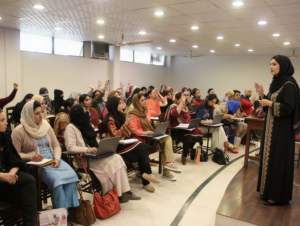
To answer this question, we must examine what is expected of students in Pakistan’s examination system. The first formal and recorded examination of a student in Pakistan starts at the matriculation level. At that stage of their education, students are expected not to reflect on their intellectual capacities but to reproduce what they have memorized—an approach commonly known as rote learning. Students spend most of their time not developing a clear understanding of the subject, but memorizing textbook language whose deeper meaning they often do not grasp. The same holds true for the questions set in examinations. They have no interest in provoking original thought or creativity in the candidate, but rather in checking whether the student has memorized each paragraph perfectly or missed any word.
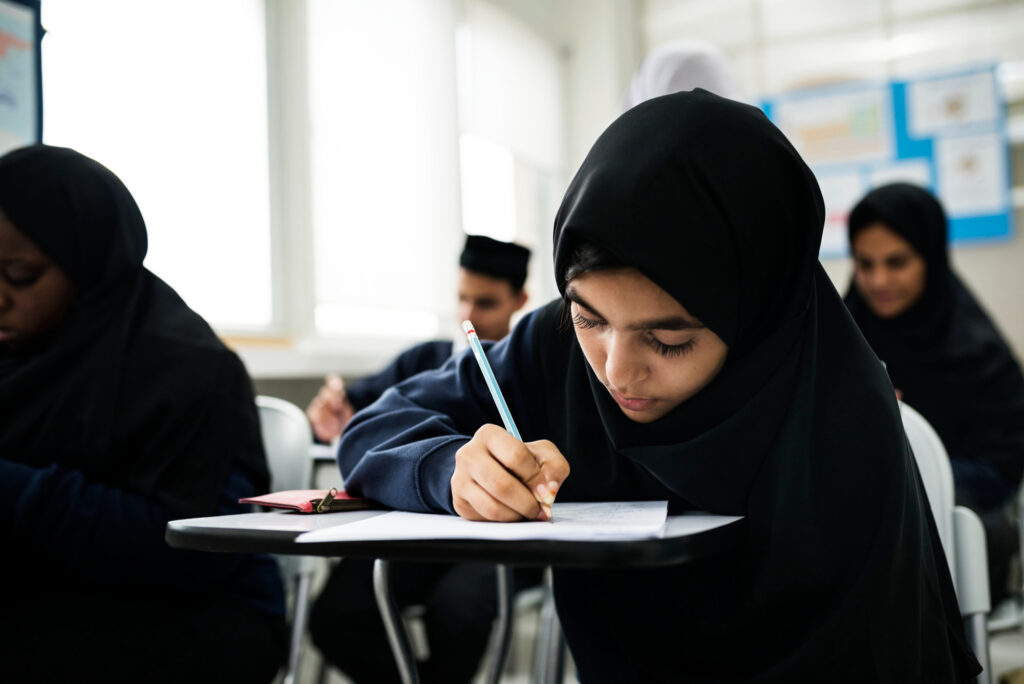
For instance, gene therapy is included in a high school biology textbook. After a thorough review of the past ten years of exam papers, I have found no question related to this topic other than “Define gene therapy,” “What is gene therapy,” or “What is meant by gene therapy.” By asking such rudimentary questions, which explicitly lack any conceptual depth, should we ever dream of our nation winning a Nobel Prize? The mind of a sixteen-year-old has such great potential that it could significantly advance the field of gene therapy. Unfortunately, our priorities lie elsewhere, and we have neglected what truly matters in the long run. Would it then be wrong to say that we have been cultivating stagnant minds for generations?
Let us now move on to university education in Pakistan. Education in university disciplines is, by and large, thought to be a pursuit of pure enlightenment in their respective fields. It is disheartening to note that the system of education in universities is even worse than at the matriculation or intermediate levels. The annual system at the school and college levels is already problematic. How can we then expect improvement from a university system that lasts less than half a year? In such a system, students are expected to retain knowledge for less than a semester, not even a full year. Moreover, the questions asked in university exams are similarly designed to test rote memorization rather than the student’s true understanding of the subject. Universities in Pakistan have become “degree shops” rather than centers of intellectual growth, which they ought to be.
The pressing question, then, is how to transform the outcomes of our education system—from individuals who merely retain information to minds capable of applying and shaping it. Achieving this shift requires deliberate policy reforms aimed at cultivating competent individuals who can become policymakers rather than passive learners of policy:
1- Recruitment of Competent Teachers:
A competent teacher is not defined by the number of degrees or certificates they hold, but by their commitment to the profession. A truly effective teacher inspires students to think critically and cultivates a genuine interest in the subject. To foster such dedication, the government should introduce policies that elevate the status and security of teachers—offering incentives such as residential housing, competitive salaries, and long-term job stability. In doing so, the government will develop a sense of appreciation among teachers. As the saying goes, “Brains, like hearts, go where they are appreciated.”
2- Transformation of the Examination System:
Examining students is a crucial step to assess their understanding of the subject. Unfortunately, the examination system in Pakistan has failed to fulfill this requirement. A shift from knowledge-based questions to application-based ones is the real need of the hour. The aim must not be to evaluate what a student knows about the subject, but what they can do for society at large after learning it. This is possible only when the testing system ensures that evaluation is based on understanding rather than rote memorization.
3- IT-Based Learning:
Since the dawn of the twenty-first century, education has shifted toward computer-based learning. Today, it is nearly impossible to avoid information technology and artificial intelligence, which have become essential tools. To overcome rote learning, we must understand its causes. Just as ineffective teachers impede student development, outdated teaching methods can have the same limiting effect. Students should be exposed to visual learning environments—such as multimedia projectors and AI-generated content—to strengthen conceptual understanding.

4- Development of Practical Skills:
A theory learned without practical application is like feeding a statue and hoping it says, ‘I’m full.’ Educational institutions must recognize the importance of hands-on learning. For example, STEM students often learn how a DC motor works or how Carnot’s engine is designed without understanding their real-world use. Schools should schedule days to demonstrate these concepts and treat the activity as performance-based learning, awarding marks for it.
5- Compulsory Co-Curricular and Extracurricular Activities:
Participation in co-curricular and extracurricular activities is declining, with parents increasingly less inclined to encourage involvement. Sports, debates, poetry, and literature are being neglected as technology-based learning takes over. While STEM fields prepare us for a career, these activities nurture our passions and emotional well-being. Therefore, literature, debates, and sports are as vital to us as science and technology.
These policy measures are not mere recommendations but an urgent need of the time. If they are taken into serious consideration, it can be confidently expected that Pakistan will undergo a remarkable shift, and the enlightenment, civility, and innovation we have been yearning for decades will no longer remain a thing of the past but become a living reality.
Disclaimer: Any opinions expressed in this article do not necessarily reflect the opinions of the Pakistan Education Review. This content is meant for informational purposes only.
About the Author:
Mueed Shakeel is a law student at Government College University Lahore with a strong interest in law, philosophy, society, and the educational development of youth. He is also an active member of the Youth Advocacy Forum.