
One has to question where we are heading as a country when our education system faces a deepening crisis at all levels, at home and abroad; papers get leaked, Gulf countries refuse to hire skilled workers on the grounds of inadequate talent quality, and an entire generation navigates a system increasingly designed to extract from them rather than develop them. While there may be many fronts to address, the one I want to focus on is a turning point in every student’s academic life: entry tests. And what they have become.
Every June, China holds one of the largest examinations by scale: Gaokao, reaching up to 13 million candidates in some years. Officially known as China’s National College Entrance Examination, it was introduced in 1952, suspended during the Cultural Revolution, and reinstated in 1977 under Deng Xiaoping. Since then, Gaokao has been considered one of the most crucial structural pillars of China’s economic rise. For a country as large and diverse in population, culture, and economic participation, devising a system that is fair and equitable for all is no small task. Gaokao was introduced as that standardization measure; a single national standard around which China’s educational system was reorganized. Just like entry tests in Pakistan, Gaokao preparation begins as early as secondary school. Unlike entry tests in Pakistan, it is state-administered, universal, and covers all universities and all fields across the country, making it compulsory for students to engage with core subjects on par with each other, while leaving room for elective combinations under its “3+1+2” and “3+3” models implemented by provinces according to their own educational objectives.
The structural consequence of Gaokao is what matters here. Because it is cumulative and aligned to a curriculum that runs from middle school through higher secondary, the preparation burden is distributed across years of schooling rather than compressed into a final-year sprint. Anything learned during school years, directly or indirectly, contributes toward examination readiness. This fosters a scientific temperament and learning mindset, even among the most disadvantaged students, as they grow with the system over the years. Gaokao is criticized for its tight pressure and fairly so, given the documented mental health toll and the persisting urban-rural gaps that provincial quotas only partially address. But the mechanism itself resists commercial capture. The state owns it, standardizes it nationwide, and embeds preparation in ordinary schooling rather than outsourcing it to a coaching industry. That’s how China industrialized massively and lifted hundreds of millions out of poverty. At the heart of those programs and reforms, Gaokao acted as a pivot in building an educated public ready to drive that monumental rise and steer it responsibly.

This brings me back to the question of entry tests in Pakistan. MDCAT recorded a pass rate of approximately 45% in 2023, meaning more than half of all candidates, after years of preparation, were filtered out with no portable credential, no alternative pathway, and no accountability on the institution’s part for that outcome. Beyond MDCAT, the fragmentation is more telling: virtually every major private university now administers its own proprietary entry test. The much-anticipated standardization tool became a prestige metric, and many institutions moved to offer their own versions. Soon enough, that prestige signal became a business model for a mechanism to extract quick revenue from wanting and struggling youth, disillusioned about their future and scrambling for opportunities under considerable economic distress.
Coaching centers identified the arbitrage first. When each university runs its own test in its own format, preparation cannot be generalized; it’s institution-specific. The coaching industry monetized that fragmentation, and conservative estimates place Pakistan’s test preparation market in the billions of rupees annually. The student from Lahore’s DHA and the student from D.G. Khan are not just competing on academic merit. They are competing on the depth of their family’s capacity to fund preparation cycles. The entry test, rather than neutralizing socioeconomic advantage, has systematized it for commercial consumerism.
Then institutions took the next step. Repeat attempts are legitimate in Gaokao as a second genuine effort, but in the Pakistani context they became a supplementary revenue mechanism. Application fees, repeat test fees, preparation material sales. Today the promise is no longer relevant or sound. You can try more than once, hoping you’ll make it at least once. Many do not. And there is no safety net on the other side. No credential, no skill recognized by a working economy, no place safe or secure for a young person who did not make it to the institution in question. This is not education. It is neither training nor grooming. It is a toll both at the gate and along the approach road.

What is required is not the abolition of entry testing but its reclamation as a public good. A single, state-administered national entry examination, disaggregated by field but standardized within each, would remove the commercial incentive that has corrupted institutional testing, distribute preparation across the full school curriculum, and produce a credential with nationally legible value regardless of which institution a student ultimately attends. India’s JEE and NEET demonstrate that a large, diverse federal state can administer field-specific national examinations at scale. The obstacle in Pakistan is not administrative complexity; it is the institutional interest that benefits from the current fragmentation.
Pakistan’s educated youth are not underperforming because they lack ability. They are navigating a system built to extract from them. That is a policy failure, not a cultural inevitability, and policy failures can be fixed.
Disclaimer: Any opinions expressed in this article do not necessarily reflect the opinions of the Pakistan Education Review. This content is meant for informational purposes only.
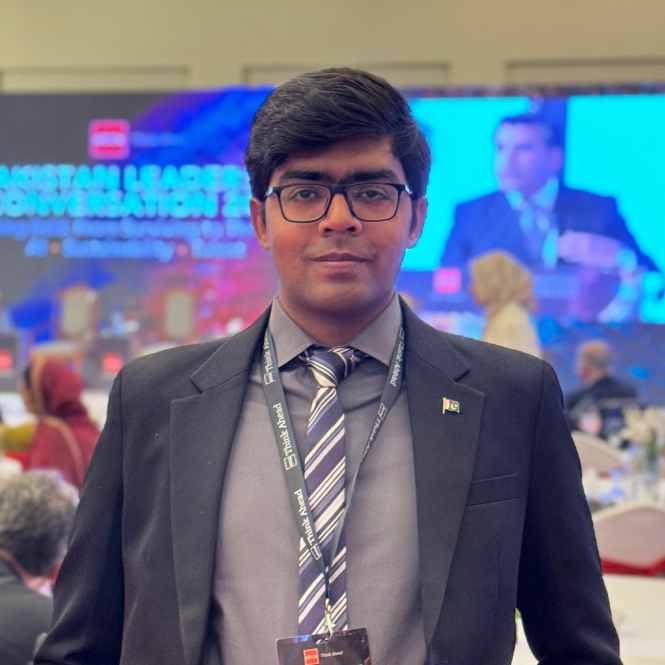
About the Author:
Muhammad Raafay is an ACCA student, entrepreneur, sustainability advocate, and opinion writer based in Lahore. He is a partner at AccountancyHub Cambridge Learning Institute and a patron of the Network of Student Accountants in Pakistan (NSAPAK). He writes on economics, public policy, and geopolitics, focusing on Pakistan’s structural challenges.