
An educational label can sound precise while saying very little. A talking toy may promise vocabulary, a puzzle may claim to build intelligence, and a construction set may be advertised as STEM learning. For Pakistani parents comparing products online, the useful question is not whether the packaging uses the word educational. It is whether the promised skill, the child’s play, and the available evidence actually fit together.
Parents do not need a laboratory to make a better decision. They can translate a broad marketing claim into observable questions: What will the child do? What will an adult be able to discuss with the child? Is the challenge suitable for this child’s age and abilities? Is the claim supported by evidence, or only by lights, sounds, and confident wording?
Start with the Claim, Not the Packaging
The American Academy of Pediatrics’ clinical report on toy selection warns that many developmental claims used to advertise toys are not based on scientific evidence. It also emphasizes that toys are tools for play and interaction, not automatic teachers. That distinction matters: a product can offer a useful play opportunity without proving that it will raise a child’s IQ, accelerate speech, or guarantee school readiness.
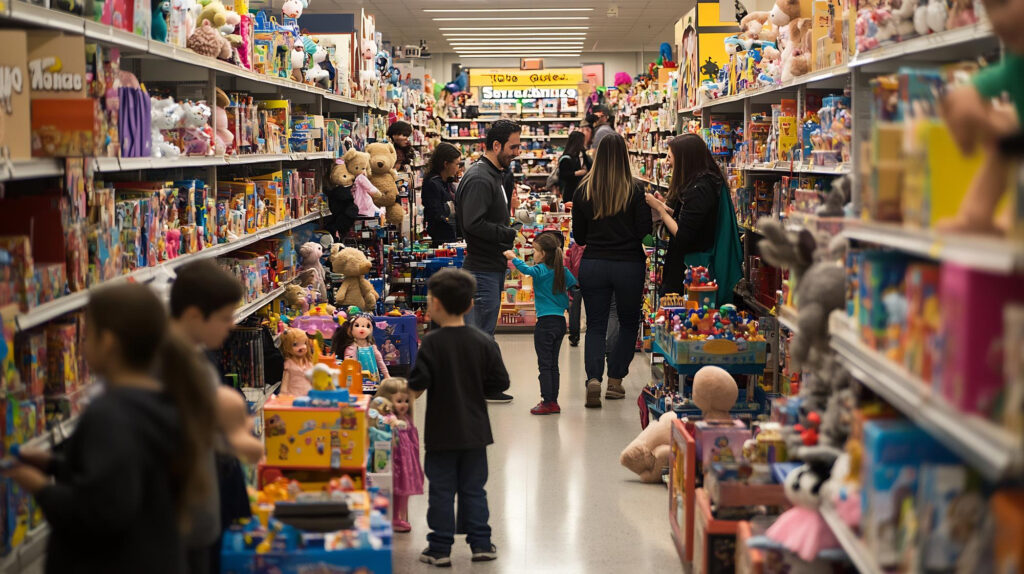
Turn the claim into a result that could be seen. If a toy says it teaches problem-solving, does the child have to plan, test an idea, notice an error, and try again? If it promises language learning, does it invite naming, storytelling, questions, or conversation? A claim that cannot be connected to a clear play behavior should be treated as advertising, not evidence.
Ask What the Child Actually Has to Do
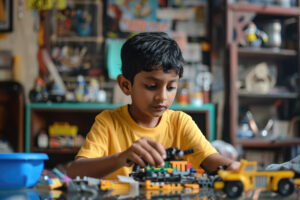
A strong learning opportunity usually leaves meaningful decisions to the child. Blocks can become a tower, bridge, shop, or imaginary city. Art materials can be combined, revised, and used to communicate an idea. Pretend-play objects can support roles, negotiation, and stories. The National Association for the Education of Young Children describes play as supporting language, problem-solving, self-regulation, imagination, physical development, and social learning. Those benefits come from active, meaningful engagement rather than from a label printed on a box.
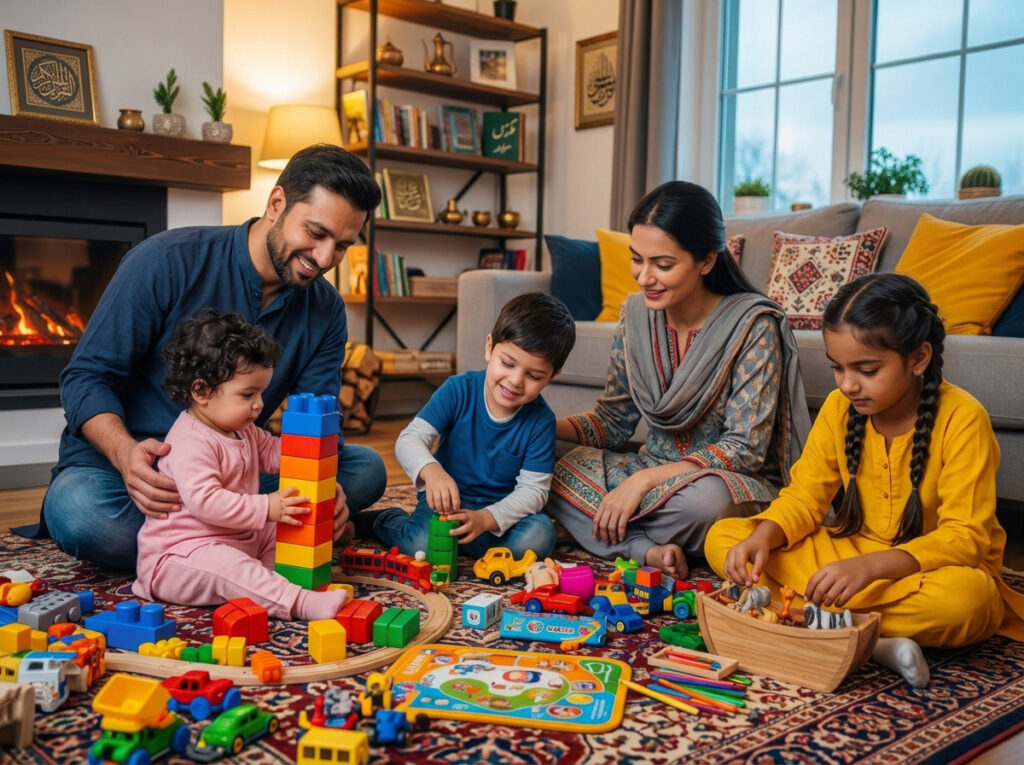
By contrast, a toy that performs the whole activity may give the child little to decide. Buttons, prerecorded praise, and flashing answers are not automatically bad, but parents should ask whether the technology opens up play or closes it down. Can the child use the toy in more than one way? Can the difficulty grow with practice? Can a parent or sibling join without merely watching the machine?
Separate the Toy from the Interaction Around It
One small but useful controlled study published in JAMA Pediatrics observed 26 parent-infant pairs with children aged 10 to 16 months. During play with electronic toys, researchers recorded fewer adult words and fewer conversational turns than during play with books or traditional toys. The sample was small and the age range narrow, so the study does not prove that every electronic toy is harmful. It does show why parents should examine the interaction a toy creates, rather than assuming that spoken words from a device equal language learning.
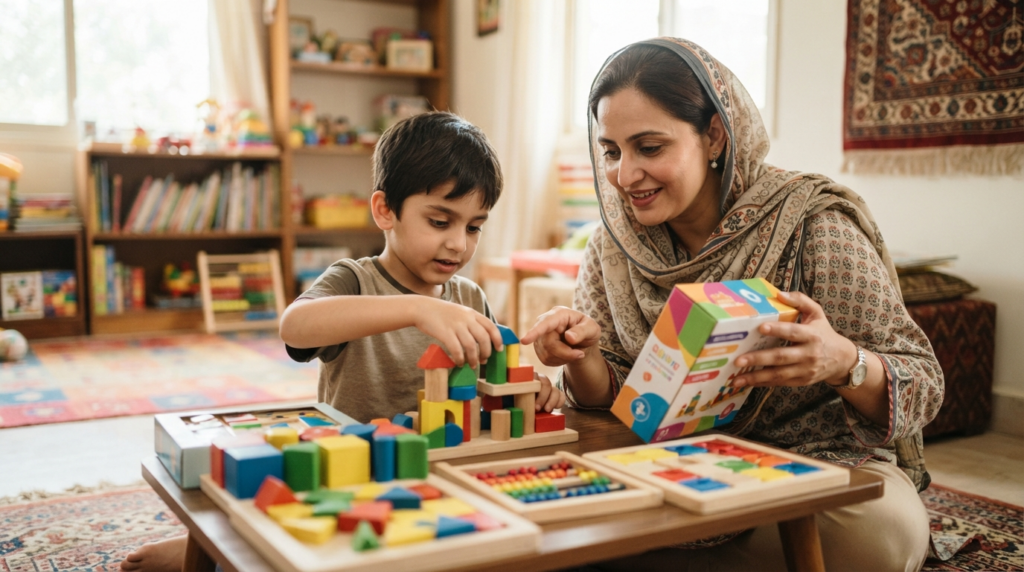
A practical test is simple: does the toy encourage the child and caregiver to look at each other, take turns, explain, imagine, and respond? A modest toy used in a rich conversation may offer more learning value than an expensive device that does all the talking.
Match the Challenge to the Individual Child
Age guidance is not only a measure of difficulty. It can reflect expected motor skills, attention, play behavior, and safety issues such as small parts. The U.S. Consumer Product Safety Commission’s age-determination guidance is not Pakistani law. Still, it illustrates an important principle: the intended age should relate to the product’s characteristics and how children at different stages are likely to use the toy.
Parents should combine the label with what they know about their child. Check whether pieces are manageable, instructions are understandable, and success is possible with a reasonable amount of help. A challenge can be productive; repeated confusion or frustration is not proof that learning is taking place. For children with developmental, sensory, speech, or motor concerns, advice from a qualified professional is more reliable than a product’s therapeutic-sounding claim.
Use a Five-Minute Evidence Check
Before ordering, read beyond the title and photographs. Look for an exact age range, box contents, dimensions, power requirements, warnings, and a clear description of what the child will do. Ask the seller which batteries are needed, whether pieces can detach, and what happens if the item arrives incomplete or damaged. If the listing promises a specific learning outcome, ask what evidence supports that outcome and whether the evidence applies to this age group.
After delivery, watch the first play session. Notice whether the child explores, asks questions, invents uses, persists after mistakes, or invites someone else into the activity. Also check the physical product against the listing. Safencia, a Lahore-based online toy retailer with which the author is associated, publishes a free toy-buying and safety checklist for Pakistani parents covering age guidance, small parts, batteries, magnets, box contents, and parcel inspection. It is a practical record, not independent proof that any toy is educational.
Buy the Play Opportunity, Not the Promised Future
The most defensible educational claim is modest and specific: this toy invites sorting, building, pretending, drawing, balancing, taking turns, or telling stories. Whether that opportunity becomes learning depends on the child, the context, repeated play, and the people who join in. Parents should be cautious when a product promises accelerated development, guaranteed achievement, or expert-level outcomes without clear evidence.
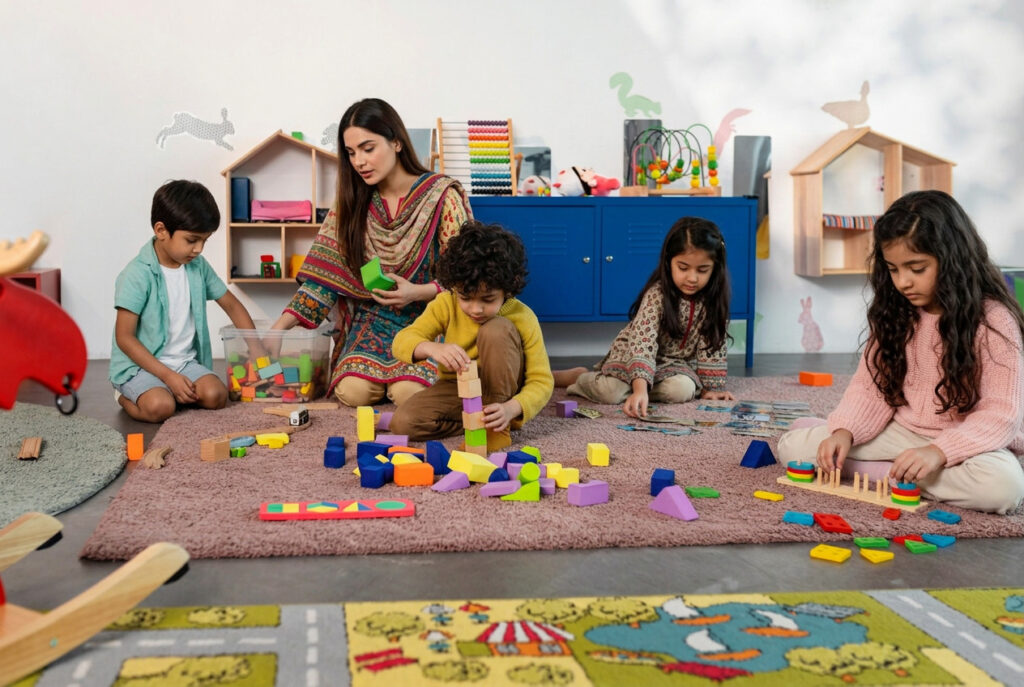
A better buying rule is to choose the toy for the play it can reliably support today. If the child has meaningful choices, the challenge fits, conversation remains possible, and the listing is transparent about safety and contents, the toy may be worthwhile. The word educational can start the evaluation, but it should never end it.
Disclaimer: Any opinions expressed in this article do not necessarily reflect the opinions of the Pakistan Education Review. This content is meant for informational purposes only.

About the Author:
Jawad works with Safencia, a Lahore-based children’s toy retailer, and writes about making practical, evidence-aware choices when evaluating educational-toy claims. He focuses on clear product information and responsible claims about children’s products.