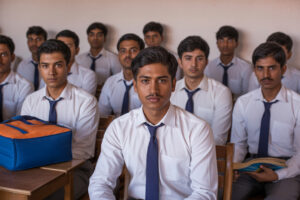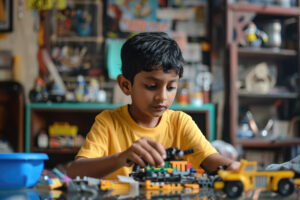

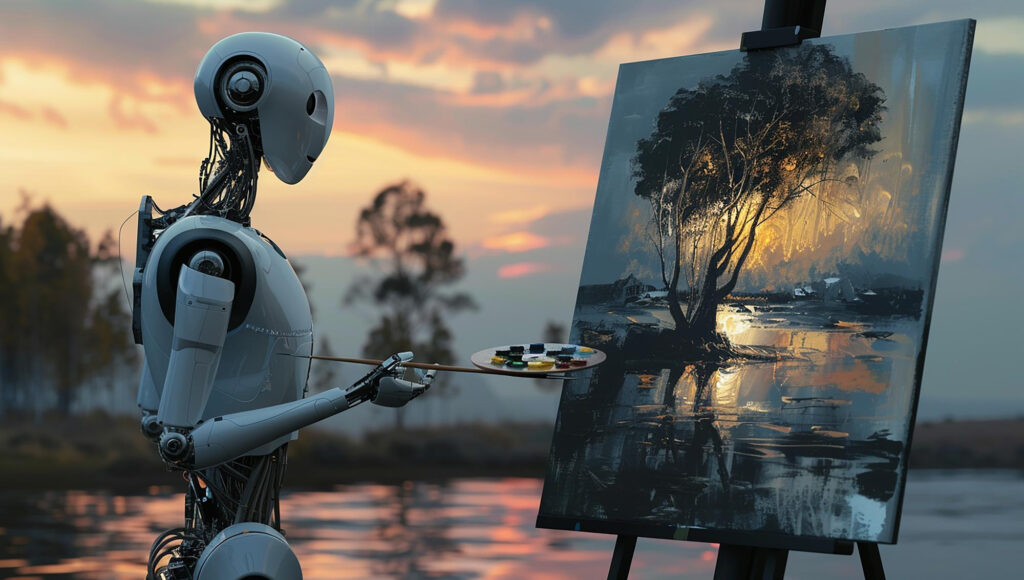
There was a time when an art student entered the studio carrying a sketchbook, charcoal, brushes, or clay. The traditional studio space was a realm defined by keen observation, hands-on experimentation, and productive uncertainty. A line could fail, a color choice could surprise, and a piece of raw clay could resist the maker’s intention. Through these physical, friction-filled encounters, students learned not only how to make art, but how to see deeply. Today, a laptop or mobile phone is often enough to produce, within seconds, an image that once required hours or even weeks of painstaking drawing, painting, photography, or digital manipulation. The contemporary student simply types a text prompt, and a polished visual appears. When observing this process, an educator might naturally ask, “Did you make this?” However, in today’s technological landscape, a more essential question arises: “What did you contribute to making it?”
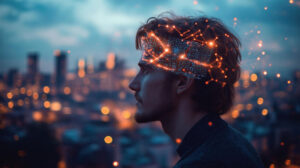
Generative artificial intelligence is fundamentally transforming how images are produced, distributed, and understood across global culture. For emerging art students, these computational tools offer remarkable possibilities for rapid prototyping and creative experimentation. At the same time, this paradigm shift raises difficult, urgent questions about visual originality, artistic authorship, creative labor, cultural representation, and the fundamental purpose of studio education. The central conundrum facing contemporary academies is straightforward: What should art education teach when making an image is no longer the most difficult part of making art?
Art has never been simply the technical production of pictures. Rather, it is a complex mode of thinking through visual forms. An artwork carries memory, questions established authority, represents identity, challenges societal assumptions, preserves cultural heritage, or imagines alternative futures. Its true significance lies not merely in its superficial appearance, but in why it exists, how it was conceptualized, and how it participates in a specific historical context. When machine learning algorithms can instantly imitate historical visual styles and render complex compositions, the human artist’s distinctive contribution becomes paramount: intention, lived experience, critical judgment, memory, nuance, context, imagination, doubt, and moral responsibility.
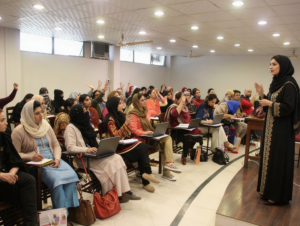
This debate has profound, immediate relevance for Pakistan’s academic landscape. The Higher Education Commission of Pakistan recognized this evolution in its 2025 revised undergraduate Fine Arts curriculum. The updated framework explicitly bridges traditional, contemporary, and emerging media by incorporating artificial intelligence-integrated art practices alongside classical methodologies. Crucially, the Commission emphasizes conceptual thinking, rigorous critical analysis, and deep engagement with the ethical, social, and cultural dimensions of visual art.
Pakistan has an extraordinarily rich visual and material tradition spanning miniature painting, calligraphy, intricate textiles, ceramics, architectural ornamentation, folk imagery, photography, and vibrant contemporary practices. Students who enter digital spaces bring these deep historical lineages with them. Technological advancement must not result in cultural erasure or displacement. Educators must resist training students merely to reproduce homogenized, global digital aesthetics. Instead, institutions should encourage students to deploy emerging technologies to interrogate their immediate environments, local histories, and pressing societal questions. While an artificial intelligence prompt might generate a technically impressive rendering of a generic cityscape, an artwork that thoughtfully addresses local visual culture, disappearing craft practices, regional migration, climate anxiety, or digital identity carries infinitely greater significance. The ultimate objective must be an art education that is technologically capable yet fiercely grounded in local culture.
This pedagogical shift requires establishing artificial intelligence literacy as a core artistic competency. In its 2023 document, Guidance for Generative AI in Education and Research, along with its 2024 publication, AI Competency Framework for Students, UNESCO outlines four key dimensions for modern learners: cultivating a human-centered mindset, understanding the ethics of artificial intelligence, mastering technological techniques, and grasping system design. UNESCO emphasizes that students must become ethical, responsible co-creators equipped with robust critical judgment. In art education, students must not only learn to operate computational tools; they must also learn to critique them rigorously.
Artistic inquiry must challenge the machine itself. Who trained the vast visual datasets on which generative models depend? Whose cultural histories are prioritized, and whose visual traditions are systematically omitted? What happens when an algorithm quietly reproduces harmful cultural stereotypes? What becomes of creative labor when a distinct visual style can be extracted and cloned in seconds? How do we define originality when an artwork emerges from the tension between human intent and algorithmic prediction?
To address these questions, the roles of the teacher, the studio, and academic assessment must evolve dramatically. When students can generate infinite visual reference material and technical instructions instantly, the professor can no longer function merely as an instructor of manual technique. Instead, the educator becomes a mentor, critical dialogue partner, researcher, and curator of challenging questions. Studio critiques must pivot from evaluating technical execution toward interrogating creative intent. Educators must ask: Why was this specific image chosen? What idea are you trying to communicate? What evolved between your initial concept and the final artifact? What did the algorithm contribute, and what did you contribute? What ultimately makes this work yours?
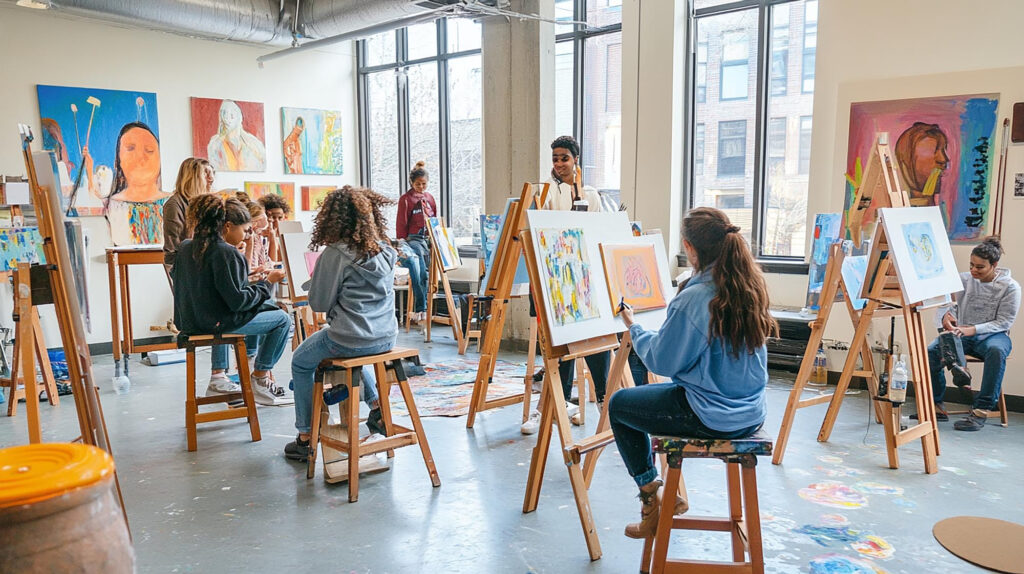
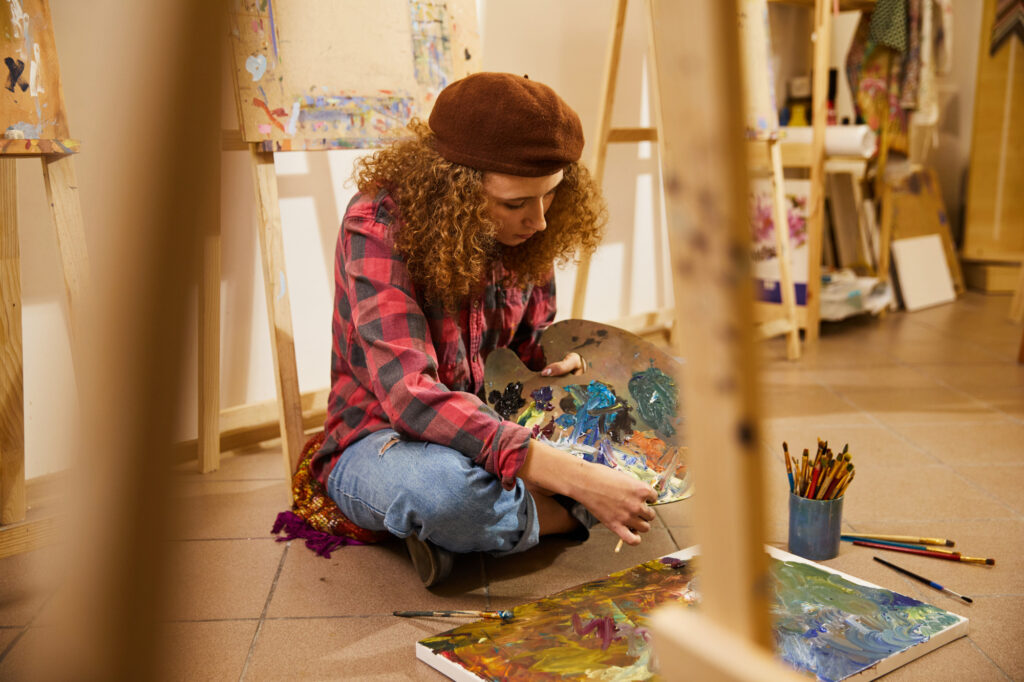
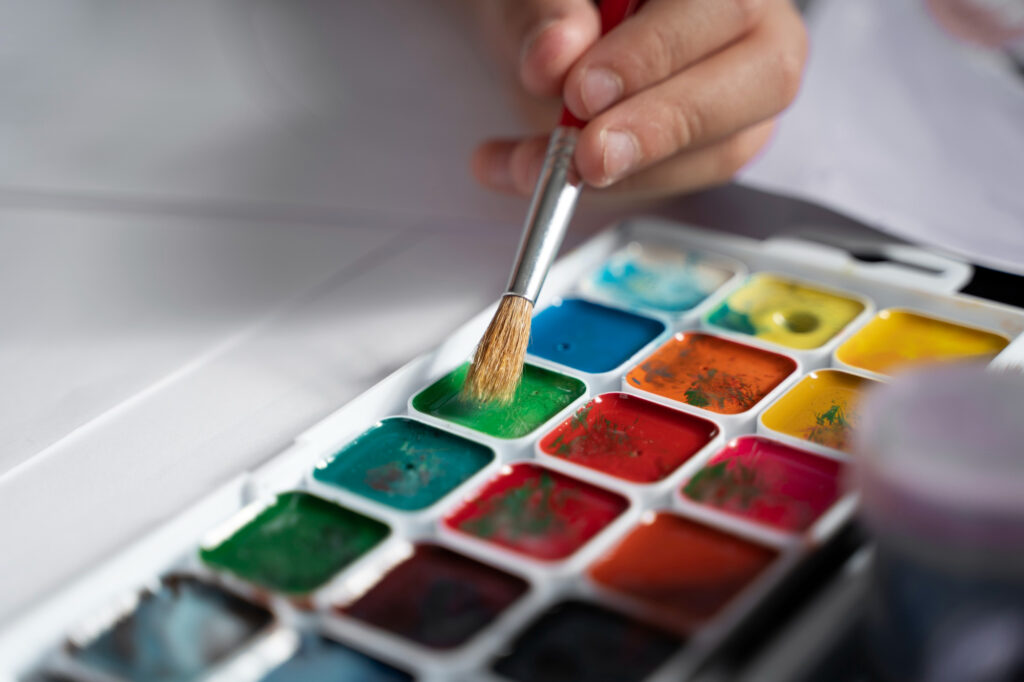
At the same time, traditional studio practice must not be abandoned. Drawing from observation, working with raw clay, mixing physical pigments, and handling tactile materials instill embodied forms of knowledge that cannot be replicated on a digital screen. The contemporary studio should not host a bitter battle between analog craftsmanship and synthetic computation. Rather, it should serve as an integrative site where the hand, eye, material, camera, computer, and artificial intelligence encounter and enrich one another.
Furthermore, evaluation methods must move away from grading only the finished, static picture. Academic assessment should document and grade the entire process of artistic thinking. Submissions ought to include preparatory sketches, research notes, developmental iterations, detailed records of algorithmic prompts, material tests, and reflective writing. Rather than banning digital technologies, this approach holds students fully accountable for every aesthetic choice they make.
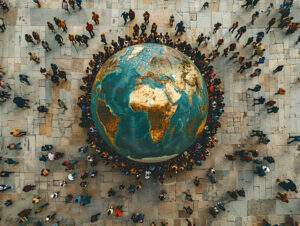
Ultimately, the future art curriculum must cultivate five interconnected forms of literacy: visual literacy to read images critically; material literacy to understand tactile processes; digital literacy to command software; artificial intelligence literacy to evaluate ethics and bias; and cultural literacy to position work within history and society. Together, these literacies cultivate thinking artists rather than mere technical operators. The world does not lack images; it is saturated with them. What remains scarce is the capacity to determine which images truly matter. As algorithms take over automated visual generation, the studio’s purpose becomes deeply human: teaching students to observe, question, empathize, and take full responsibility for what they bring into the world.
Disclaimer: Any opinions expressed in this article do not necessarily reflect the opinions of the Pakistan Education Review. This content is meant for informational purposes only.
About the Author:
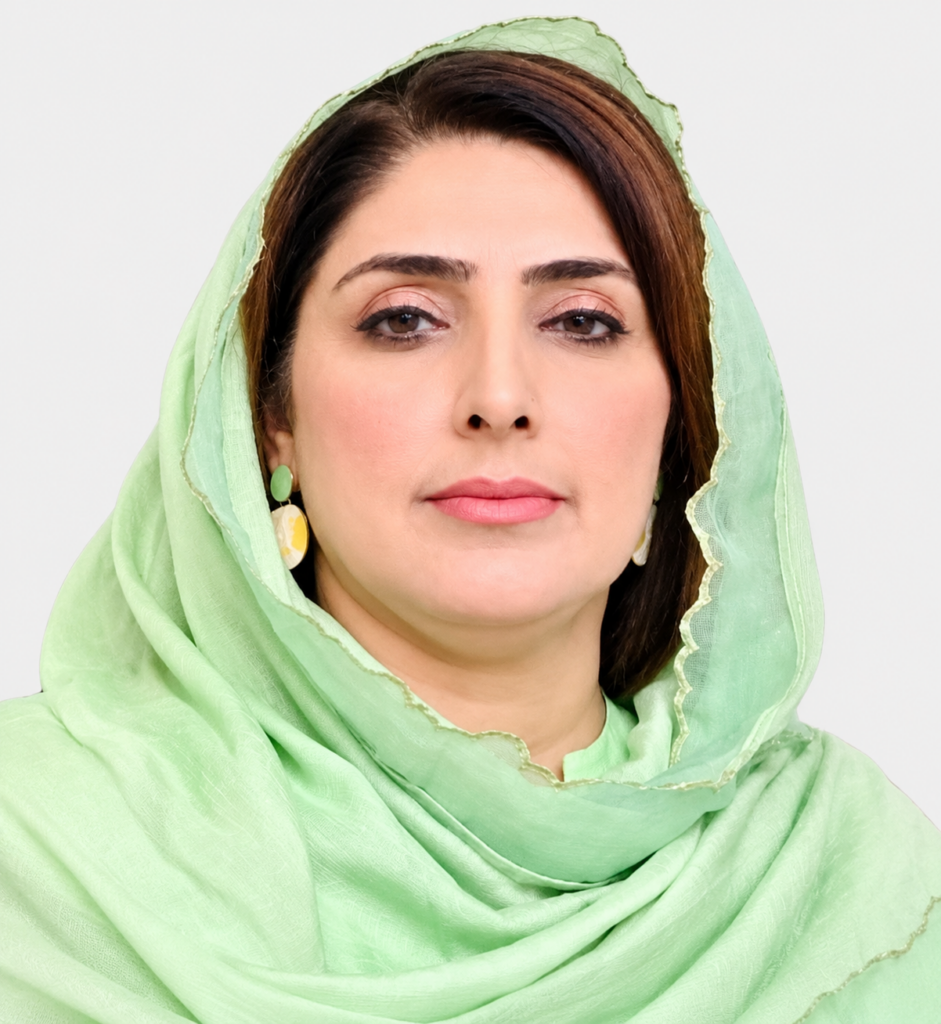
Maryam Saif is a visual artist, educator, and art critic at the Institute of Art & Design, University of Sargodha, Pakistan. Her interests include visual art, contemporary art practice, art criticism, art education, and the relationship between creative practice, technology, and society.