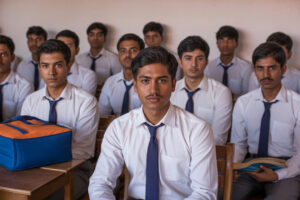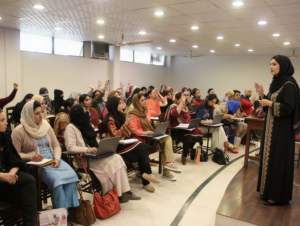

In an era defined by unprecedented access to knowledge and learning opportunities, Pakistan’s real education crisis is not merely structural; it is deeply psychological. “Education is not preparation for life; education is life itself,” argued John Dewey. Yet in Pakistan, education has been reduced to mere preparation for employment; stripped of its broader purpose of intellectual growth, ethical development, and social responsibility.
While policies, reforms, and digital platforms have expanded educational access, their impact remains limited because a prevailing societal mindset views education primarily as a means of employment rather than a tool for holistic growth. This disconnect between policy vision and public perception has reduced education to a transactional process, undermining its transformative potential. Thus, the crisis of education in Pakistan is not merely one of mindset or policy in isolation, but of how policies have failed to reshape, and often reinforced, a narrow societal perception of education.
At the societal level, education is largely perceived as an investment aimed at securing stable income. Degrees are pursued not for intellectual enrichment or civic development, but as passports to conventional careers. This mindset discourages creativity, risk-taking, and independent thinking. As a result, even when opportunities such as freelancing, entrepreneurship, and global online learning platforms emerge, many students hesitate to explore them, constrained by societal expectations and fear of uncertainty. Thus, the issue is not the absence of opportunities, but the inability to recognize and utilize them effectively.
From a policy perspective, Pakistan has frameworks aimed at addressing these challenges. Documents like the National Education Policy 2017–2025 and reforms such as the Single National Curriculum (SNC) emphasize critical thinking, character building, and equity. However, their implementation remains weak and often contradicts their stated objectives. The persistence of rote learning, outdated curricula, and exam-oriented teaching reflects a fundamental gap between policy intent and ground realities.
The ASER Pakistan reports provide a powerful case study. While enrolment rates have improved significantly, learning outcomes remain stagnant. This “enrolment-learning gap” demonstrates that increasing access without changing mindset and pedagogy yields limited results.

At first glance, this appears to be a societal problem rather than a policy failure. However, this distinction is misleading. Policies do not merely regulate systems—they shape behavior, define success, and influence collective attitudes. When exams reward memorization, when institutions prioritize degrees over skills, and when career pathways remain narrowly defined, policy inadvertently reinforces the very mindset it seeks to change. Therefore, meaningful reform must use policy as an instrument of mindset transformation.
The most critical starting point is reforming assessment systems. Examination boards such as the Board of Intermediate and Secondary Education (BISE) continue to reward rote memorization. As Paulo Freire critiqued in Pedagogy of the Oppressed, traditional education often becomes a “banking system” where students are passive recipients of information rather than active participants in learning. Pakistan exemplifies this model—students memorize, reproduce, and forget. By shifting toward concept-based evaluations, analytical questions, and project-based learning, policy can redefine what success looks like. Over time, this will encourage students to prioritize understanding over reproduction, gradually altering deeply ingrained learning behaviors.
Equally important is broadening students’ aspirations through structured career guidance. While initiatives like the Ehsaas Undergraduate Scholarship Program have expanded access, they must be complemented by institutionalized career counseling. By exposing students to diverse and emerging fields, policy can challenge the societal fixation on a limited set of professions and encourage more informed, interest-driven choices.

Furthermore, education policy must be aligned with economic and innovation frameworks. Coordination between the Higher Education Commission (HEC) and the Planning Commission of Pakistan can ensure that education promotes entrepreneurship, digital skills, and innovation. Such alignment sends a powerful societal signal: education is not merely about securing jobs, but about creating value and solving real-world problems.
Another crucial dimension is teacher reform, which remains inadequately addressed. Through bodies like the National Accreditation Council for Teacher Education (NACTE), policies must enforce continuous professional development focused on inquiry-based learning. Teachers, as frontline actors, can reshape classroom culture by encouraging questioning, dialogue, and intellectual curiosity—thereby directly influencing student mindsets.
Integrating digital education also offers a pathway for transformation. Initiatives such as TeleSchool demonstrated technology’s potential but lacked continuity. A comprehensive digital strategy can promote self-directed learning, enabling students to move beyond passive dependence on textbooks and develop habits of lifelong learning.
Finally, curriculum reform must redefine the purpose of education itself. Efforts under the Single National Curriculum must go beyond standardization to embed ethics, civic responsibility, and critical inquiry. By doing so, policy can reposition education as a means of personal growth and societal contribution, rather than merely a stepping stone to employment.
Countries like Finland and Singapore have successfully redefined education by focusing on critical thinking, creativity, and well-being rather than exams. As Yuval Noah Harari argues in 21 Lessons for the 21st Century, the future belongs to those who can “reinvent themselves repeatedly.” Pakistan’s rigid, exam-oriented system contrasts with this evolving global paradigm.
The way forward lies in a dual transformation: reforming policy frameworks while simultaneously reshaping societal mindset. Education must be reclaimed as a process of intellectual empowerment, ethical awareness, and lifelong growth. As Nelson Mandela aptly stated, “Education is the most powerful weapon which you can use to change the world.” However, its power can only be realized when it is valued not merely for economic returns, but for its capacity to shape thoughtful, innovative, and responsible citizens. Until this shift occurs, Pakistan will continue to produce graduates with degrees but without direction, leaving vast opportunities untapped in an increasingly knowledge-driven world.
Disclaimer: Any opinions expressed in this article do not necessarily reflect the opinions of the Pakistan Education Review. This content is meant for informational purposes only.
About the Author:
Samiya Kiran is a member of the Pakistan Youth Parliament and works at the intersection of social justice and youth advocacy.