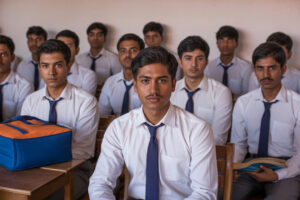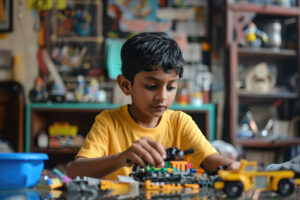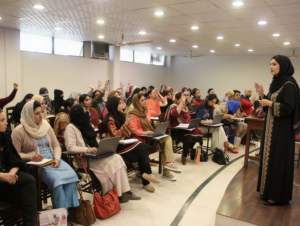

“Education is a matter of life and death for Pakistan,” Quaid-e-Azam Muhammad Ali Jinnah told the All-Pakistan Educational Conference in November 1947. More than 78 years later, Pakistan has formally constitutionalized that warning without meaningfully financing it. Article 25-A, inserted into the Constitution by the 18th Amendment in 2010, holds that “the State shall provide free and compulsory education to all children of the age of 5 to 16 years in such manner as may be determined by law.” And yet the most recent Household Integrated Economic Survey places 20 million Pakistani children outside the school system.
In practice, “free” has come to mean tuition-free, plus everything else—uniforms, textbooks, transport, examination dues, and informal levies. This quiet privatization of cost is among the clearest reasons so many of our children remain outside the classroom. Pakistan has not removed the price of education; it has merely shifted the burden of financing it from the state onto individual households. The start of a school year now resembles a financial emergency rather than a constitutional entitlement.
A Right on Paper, an Obligation in Practice
The numbers determine their own story. The UN-backed Incheon Declaration recommends that governments allocate 4 to 6 percent of GDP to education. Pakistan allocates 0.8 percent. The figure alone would be damning, but the trajectory is worse: Save the Children, citing the Pakistan Economic Survey, reports that public education spending fell by 29 percent between July 2024 and March 2025. During a year when uniforms, books, and transport became more expensive for Pakistani families, the state spent less on the public education system meant to cover them. As the state retreats, the cost is quietly transferred to households least able to absorb it. Pakistan’s education crisis is therefore no longer just a funding issue, but a system where education remains constitutionally public while access to it becomes increasingly private.
The Arithmetic of “Free”
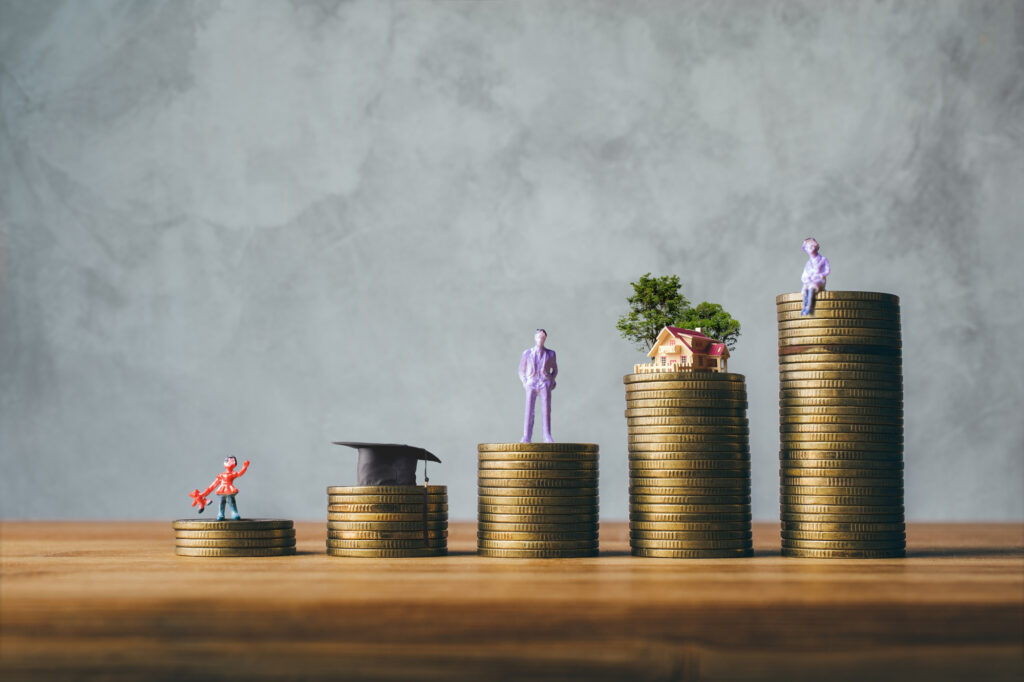
According to The Express Tribune, enrolling a single child for a new academic year now costs Pakistani families roughly PKR 30,000, once you add uniforms (around PKR 3,000), shoes (PKR 2,500–5,000), a schoolbag (around PKR 1,500), notebooks, and stationery. Because public schools receive funding regardless of performance, accountability is weak, and promised textbooks and uniforms are often delayed or unavailable.
Recurring costs follow: transport, lunch money, and informal examination “fund” contributions. For a household on the minimum wage, enrolling two children can consume a month’s income before a single class has been attended. Parents quoted in the same report allege these costs are “intentional, aimed at making schooling expensive.” Whether one accepts that charge or not, the effect is identical: children are declared entitled to education, then quietly tested on whether their families can afford access to it.
The Private Sector as a Pressure Valve
In Pakistan, when public schools falter, the private sector has expands. A November 2025 inquiry by the Competition Commission of Pakistan (CCP) found that private institutions now serve roughly 47 percent of our 55 million students, and issued show-cause notices to 17 school networks, including Beaconhouse, The City School, and Lahore Grammar School, for treating enrolled families as “captive consumers.” Branded “study packs” were sold at 53 to 280 percent above open-market prices, with parents barred from buying generic alternatives. The Punjab School Education Department followed in January 2026 with a province-wide ban on forcing parents to purchase from designated vendors. These interventions are welcome, but they describe a system that has trained households to expect education as a marketplace transaction that many cannot afford.

Costs That Compound
The financial barrier rarely operates alone. UNICEF Pakistan reports that 69 percent of school-age children in Balochistan and 34 percent in Khyber-Pakhtunkhwa are out of school, while Save the Children documents that 75 percent of Balochistan’s girls miss out entirely. These regions are hit especially hard because the cost of education extends far beyond school supplies.
In many rural areas, schools are located far from communities, making transport expensive, unreliable, and, for girls, often unsafe. Climate shocks deepen these inequalities: the 2022 floods alone disrupted learning for an estimated 2.9 million children while damaging roads, schools, and household incomes simultaneously. When families must choose between a child’s education and basic survival, the “decision” to leave school is rarely a decision at all.
Reclaiming the meaning of free education
Bridging Article 25-A and the classroom is a matter of implementation, not philosophy. First, public spending must rise toward the 4 percent of GDP target Pakistan accepted under the Sustainable Development Goal framework, with protected provincial allocations for books, uniforms, and attendance-linked cash transfers, an approach successfully demonstrated through Brazil’s Bolsa Família program. Existing systems, such as the Benazir Income Support Programme, could distribute this support without creating entirely new bureaucratic structures.
Second, provinces should extend Punjab’s regulation of ancillary costs by banning mandatory “study packs,” requiring schools to publicly disclose all compulsory charges, and penalizing violations through regular audits. Third, transport subsidies and safe-route programs, particularly for girls in Balochistan, interior Sindh, and South Punjab, should be treated as core implementation of Article 25-A rather than welfare. In many districts, children are excluded not because schools do not exist, but because reaching them safely has become economically impossible.
Conclusion
The verdict is not yet final. The Competition Commission’s action against 17 school systems, Punjab’s vendor-monopoly ban, and decades of work by organizations such as The Citizens Foundation and Idara-e-Taleem-o-Aagahi show that progress is possible when institutions choose to act. Yet the larger contradiction remains unresolved as Pakistan continues to describe education as a constitutional right while increasingly financing it like a private household responsibility. Until that gap is addressed, millions of children will remain formally entitled to schooling while remaining practically excluded from it. The promise the Quaid and the Constitution codified, cannot just remain on paper. A constitutional right that is unaffordable for millions is not fully a right yet.
Disclaimer: Any opinions expressed in this article do not necessarily reflect the opinions of the Pakistan Education Review. This content is meant for informational purposes only.
About the Author:
Muhammad Ahmed Mehar is a student at Sheikh Zayed International Academy, Islamabad, currently pursuing the International Baccalaureate Diploma Program. His academic interests include politics and development economics, with a strong inclination toward practical social initiatives such as clothing drives and food distribution programs.