Global literacy rates in developing countries range from 82% to 85% (World Bank, 2023). The South Asian Regional Average stands at 78% (UNESCO Institute for Statistics, 2023). Pakistan, even today, stands at ~63% according to recent data from the Pakistan Bureau of Statistics (PSLM-HIES and Census reports). Pakistan has the lowest rate in South Asia, and this figure also includes people who can only write their name and sign papers.
Pakistan’s youth literacy rate among those aged 15 to 24 stands at 77%. However, adult illiteracy is around 40% of all adults aged 15+ (PBS, 2023). This remains a primary drag on the overall economy.
The Literacy Deficit
Even though neighboring developing economies such as India and Bangladesh crossed the 75–80% threshold through aggressive non-formal primary education and rural school programs, Pakistan’s pace has remained stagnant (World Bank, 2023).

The paradox of Pakistan’s education sector is not a scarcity of vision. For the past 79 years, the government has produced sophisticated policies that accurately diagnose the country’s educational ailments and outline modern remedies. The National Education Policy (1998–2010) aimed to raise literacy to 70% by 2010 by bridging the gender gap and introducing information technology in secondary schools, and encouraging private sector participation (Ministry of Education, 1998). However, this led to further expansion of private education and worsened the socioeconomic divide between English-medium and public-school students. In 2009, the National Education Policy aimed to allocate 7% of GDP to education, standardize curricula across public and private domains, and improve teacher qualifications (Ministry of Education, 2009). However, constitutional reform overtook it almost immediately before its implementation roadmap could mature.
The 18th Amendment & Provincial Devolution (2010) devolved education entirely to the four provinces by adding Article 25-Atoo the Constitution. This made compulsory education a fundamental right for ages 5–16 (Government of Pakistan, 2010). However, this resulted in a coordination void. Provinces built disparate textbook boards and examination frameworks, while national literacy gains remained sluggish and non-uniform. This also created a parallel-systems divide (Cambridge, Matric, and Madrassa streams).
Class Divide & Rote Learning
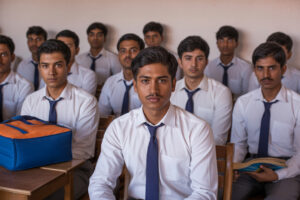
Cambridge serves only a tiny, elite fraction, offering critical thinking and global mobility. The vast majority relies on matriculation and an outdated syllabus that rewards memory over comprehension. The result? A generation of graduates who rely on rote learning (also known as the Ratta system) rather than analytical skills. Board examination systems penalize out-of-the-box responses. Evaluators accustomed to key-matching often mark down students who write original, logically sound answers that deviate from standard textbook phrasing. Rampant exam paper leaks only add fuel to the fire.
Madrassa Stream provides free religious education to low-income children. However, this often isolates graduates from the formal economy because of a non-standardized curriculum and constraining beliefs.
Inputs Over Outcomes
For eight decades, the educational policies routinely promised to raise education spending to 4–7% of GDP (Ministry of Finance, 2023). In reality, the allocation has hovered between 1.5% and 2.2% of GDP. This is significantly below the international benchmark of 4% to 6% recommended by UNESCO for developing nations. For years, the state has focused on building brick-and-mortar classrooms rather than measuring whether students can actually read or compute. In reality, it’s time to move from teaching computer science on whiteboards to actual computers. Digital literacy must evolve from learning software user interfaces to problem-solving, coding logic, and computational thinking starting in primary school.
Up to 90% of provincial education budgets are swallowed by recurrent expenditures (including primarily salary disbursements and administrative overhead). This leaves a small fraction for teacher training, digital infrastructure, science labs, or adult literacy centers. Beyond low initial allocations, provinces routinely fail to spend even their allocated development funds due to procurement delays, bureaucratic bottlenecks, and cumbersome release mechanisms.
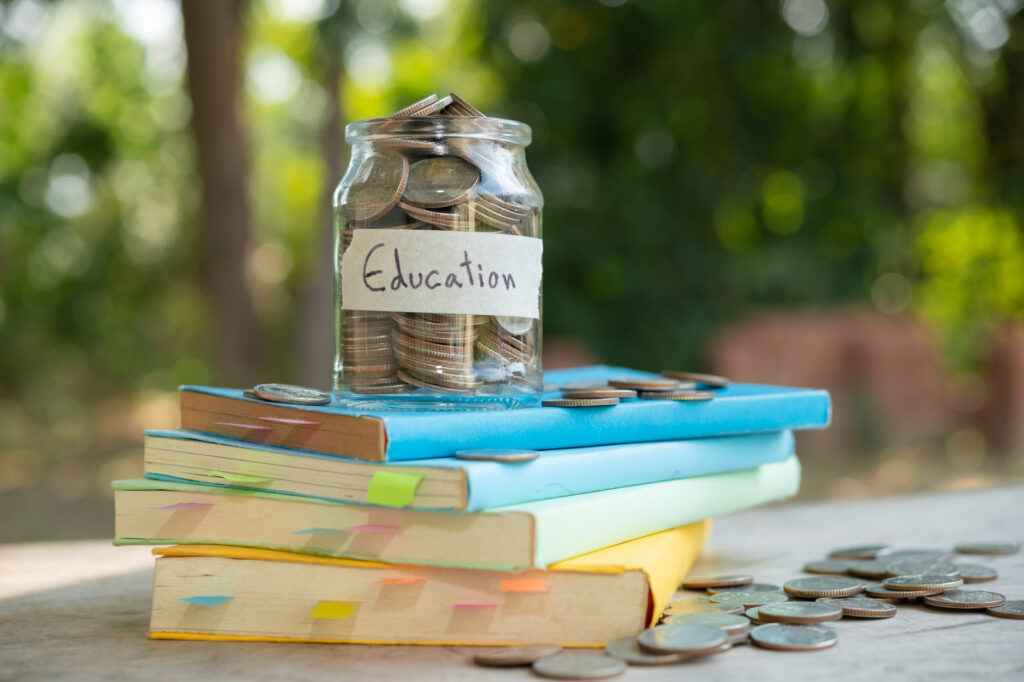
The number of OOSC is itself alarming. Despite 25.3 million children being out of school, OOSC initiatives and non-formal literacy drives receive only a small fraction of the overall education budget (UNICEF, 2023).
Pakistan’s Youth Bulge
Around 60 percent of Pakistan’s population is under 30 (UNDP, 2023), narrowing the strategic window. This demographic can either power economic growth or strain social infrastructure.
Only 9.39% of the population holds a bachelor’s degree or higher (PBS, 2023). Young people are pushed to enter general universities under the illusion of guaranteed employment, driving credential inflation. This leaves millions over-educated for low-skill positions yet unqualified for specialized technical roles. A viable national economy requires electricians, industrial technicians, software testers, precision machinists, and solar installers. However, less than 6% of youth entering the workforce go through a formal technical or vocational institute (NAVTTC, 2022). These fields are socially looked down upon, and this stigma must end. The choice before us is simple: equip our youth with functional skills today, or manage the consequences of structural stagnation tomorrow.
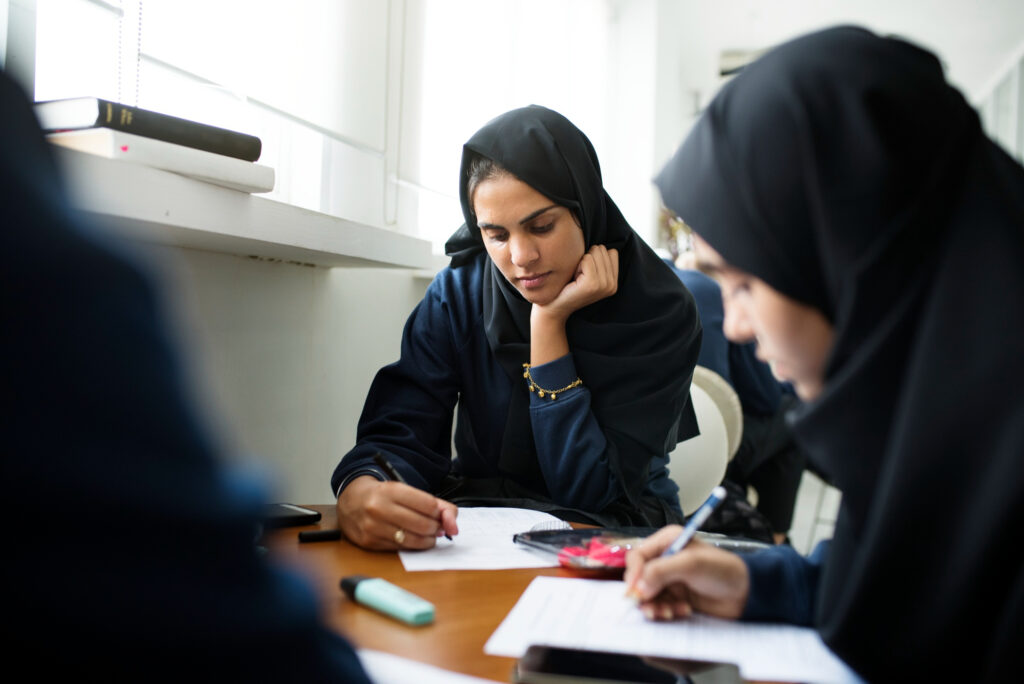
While youth literacy shows gradual upward progress, total adult literacy (30+) remains stagnant at around ~58-60% (PBS, 2023). Traditional basic literacy (signing one’s name or decoding simple words) is no longer enough.
The Road Ahead
True education reform is no longer merely a social welfare goal. It has become a critical imperative for economic survival.
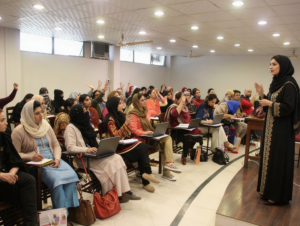
Adult literacy policies must expand beyond basic reading to encompass functional, financial, and digital literacy. In particular, women in rural and semi-urban settings should be equipped to navigate smartphone applications, mobile banking wallets (e.g., EasyPaisa, JazzCash), government portals, and basic digital marketplaces immediately to integrate them into the formal financial ecosystem because women make up about 48.8% to 49.3% of the total population in Pakistan (PBS, 2023).
The strategic window for Pakistan’s demographic dividend is rapidly closing. A population where sixty percent is under thirty years old represents an unparalleled opportunity, yet failing to equip these young people with modern skills will only exacerbate social instability and economic stagnation. Moving forward requires dismantling the cultural stigma around vocational education and eliminating the “Ratta” exam culture. As Albert Einstein famously noted, “Education is not the learning of facts, but the training of the mind to think.”
Disclaimer: Any opinions expressed in this article do not necessarily reflect the opinions of the Pakistan Education Review. This content is meant for informational purposes only.

About the Author:
Hamna Rafi is a Karachi-based department head, professional ghostwriter, and editor who specializes in building sustainable, high-output writing systems. Merging Agile leadership with integrative counseling, she guides teams and impacts dozens of minds daily.