
Education is not the filling of a vessel, but the kindling of a fire.” This profound quote from the Greek philosopher Plutarch underscores one of Pakistan’s core educational failures: prioritizing rote learning over curiosity, which stifles creativity and contributes to the nation’s low ranking on the Global Innovation Index (GII).
The Architecture of Inequality in Education
Pakistan’s economy is defined by a fragile, low-growth, and high-debt cycle. The State Bank of Pakistan warns that chronic dependency on consumption, combined with one of the lowest domestic savings rates, starves the system of capital needed for investment. This shortage of capital constrains the industrial sector, currently contributing just 18 percent of GDP, and underscores the urgent need to invest in youth skill development.
Education accounts for only 0.8 percent of GDP, while expenditure on research and development (R&D) is 0.16 percent of GDP. The World Bank’s Education Sector Report 2023 states that four out of five Grade 5 students cannot read at their grade level, suggesting that structural deficiencies hinder both learning and creativity. Pakistan’s structural framework sustains this inequality. Following the 18th Amendment, the responsibility for education policy was devolved to the provinces, which means the actual implementation, funding, and achievement of literacy rates are now primarily the collective responsibility of provincial governments. This decentralization, while intended to foster autonomy, often entrenches educational disparity by allowing major qualitative differences in standards and resources across the nation.
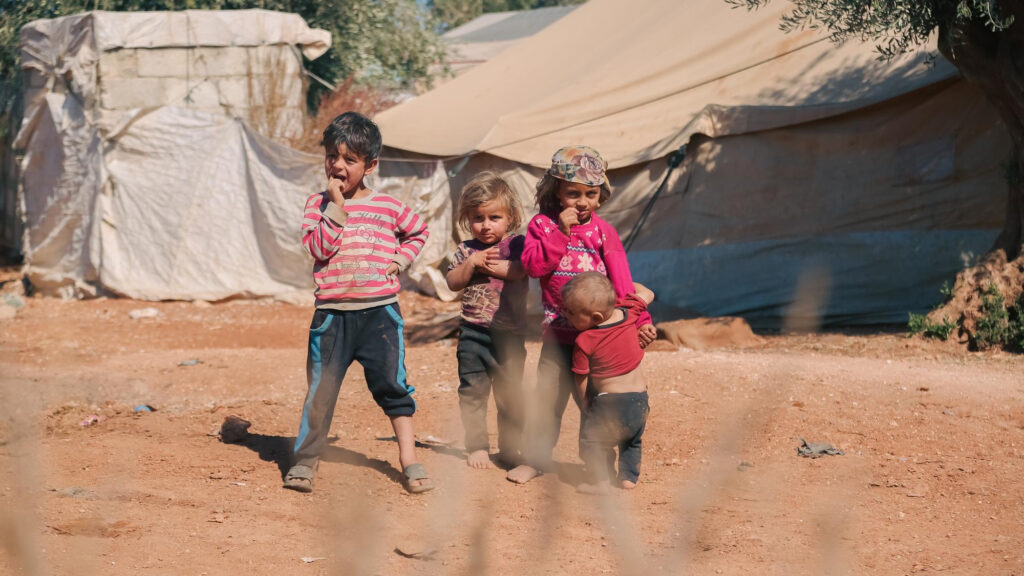
Moreover, Pakistan has nearly 26 million out-of-school children, the second- highest in the world, according to UNICEF, and a national literacy rate of approximately 62 percent, as reported by the country’s Ministry of Federal Education. The education framework is divided into three different streams: the Madrassah system, the FSc/Intermediate system, and the O/A Level system, which tightly enforce social class barriers and maintain inequity. Children from low-income backgrounds in the Madrassah system mostly receive poor education in science and global affairs. Students in the FSc/Intermediate system are burdened with high-stakes exams that suppress creativity, while O/A Level students, the privileged few, continue with international curricula that build advanced analytical as well as communicative skills. Although elite private schools are known for delivering high-quality education, many low-cost private schools face challenges such as limited teacher effort, poor instructional quality, and weak accountability—indicating that the private sector is not a universal solution.
While the Single National Curriculum (SNC) demonstrated political will to establish a unified national framework, its focus on prescribed syllabus completion and core competencies failed to institutionalize inquiry-based learning. Furthermore, its implementation remains highly uneven, hindered by resistance from provincial authorities and the private sector, as well as inadequate teacher training, ultimately preventing it from closing the education gap.
Pakistan’s Struggle: A Creativity Deficit
The Global Innovation Index ranks Pakistan 99th out of 136 countries, highlighting a critical lack of creativity in the education system. This gap is evident in a UNICEF report titled “Rising to the Challenge: Youth Perspectives on Climate Change and Education in Pakistan,” which found that only 27 percent of participants interviewed could describe the concept of climate change. Such data exposes a profound disconnect between schools and crucial global issues. This intellectual shortfall highlights the urgent need to strengthen education in Pakistan so that students can acquire the knowledge, creativity, and skills necessary to navigate the challenges of the modern world.
This sharp drop in creativity reflects an education system that values compliance over curiosity. A rigid curriculum in Pakistan emphasizes syllabus completion rather than intellectual development. This deficiency is evident in the job market, where over 31 percent of graduates remain unemployed (PIDE), mainly due to weak critical thinking and practical skills. To reverse this scenario, we must strategically pivot by rewarding curiosity and appreciating the non-cognitive skills that excel outside conventional classrooms.
Global Lessons: Creativity as a National Asset
Stifling a child’s creativity is not merely a philosophical failing; it is an act of economic self-sabotage. Pakistan needs to raise its literacy rate by at least 1.5 percent each year to move towards a knowledge-based economy. By 2035, the goal is to have an 80–85 percent literate population. This mirrors global trends where educational reform drives industrial growth and near-universal literacy rates. Turkey advanced economically by expanding compulsory education to 12 years, producing a workforce that drives its industrial and service sectors. Malaysia strategically prioritized vocational skills, enabling the country to emerge as a hub for electronics manufacturing. Most compellingly, Vietnam’s continued investment commitment in universal primary education underlies its rapid increase in high-value manufacturing and technology today. Such investments have improved individual well-being and propelled these nations to middle-income status.
Education systems worldwide have begun to rediscover curiosity as the central focus of learning. Finland offers one of the most striking examples. In Finnish schools, the education system relies heavily on teachers and devotes relatively little time to standardized tests. Instead, it champions teacher autonomy and phenomenon-based learning, where students tackle real-world concepts. Finland’s “war on disinformation” begins in primary school, teaching children to analyze and critically evaluate sources, a vital skill in the digital age.
European nations, such as Sweden and the Netherlands, are abolishing or reducing the use of screens in classrooms after noticing that over-digitization has led to a decline in literacy and comprehension rates. This trend underscores a crucial insight: true innovation lies not in more technology, but in balanced, human-centered learning.
In Saudi Arabia, a dramatic revamp of its education system is underway in line with Vision 2030, with significant investments in teacher education and STEAM education, as a shift from traditional rote learning to a focus on problem-solving skills. Several countries are shifting away from strictly examination-centered systems toward fostering innovation and cross-disciplinary education. On the other hand, countries like China, Singapore, and India have implemented significant reforms aimed at enhancing creativity and harmonizing curricula. Even in Rwanda, educators are embracing creative learning strategies to foster resilience, leveraging community-centered approaches to technology and implementing practical, cost-effective methods designed to cultivate a forward-looking citizenry.
Examples of Hope and Progress
There are also promising signs of progress in Pakistan. For instance, Aitchison College students built experimental rockets and robotics projects, proving Pakistan’s youth can innovate globally when provided the right environment. Initiatives like the International School Awards (ISA) from the British Council connect Pakistani students globally and expose them to international collaboration and project-based learning. In addition, programs like Durbeen’s teacher development initiative and STEMx Pakistan demonstrate how training colleges and EdTech startups can catalyze significant transformations.
Building on the successful expansion of Punjab’s Early Childhood Care Education (ECCE) and Foundational Literacy and Numeracy (FLN), the province is now reforming the Grades 6-12 curriculum to include inquiry-based learning, design thinking, and creativity. By building on the Smart Classroom program and providing regular teacher training, this reform is a strong example of effective provincial pilot projects.
The Way Forward
If Pakistan is to compete globally, it must transform its education system into a generator of ideas rather than merely a producer of certificates. Escaping the low-growth trap demands a unified five-point policy for global competitiveness:
1. Policy & Curriculum Reform: Mandate a national creativity-based curriculum (STEAM), operating under a unified national framework, mirroring Finland’s success. Adopting the “National Minimum Competency and Curriculum Standards (NMCCS) Framework” with federal incentives ensures feasibility and overcomes devolution challenges.
2. Private Sector Regulation: Implement a unified regulatory framework to enforce mandatory quality standards across all tiers, mandate curriculum adoption, and ensure minimum teacher wages.
3. Teacher Development: Require mandatory professional development focused on inquiry, design thinking, and the integration of physical education (PE)/competitive sports to transition educators away from rote learning.
4. Infrastructure & Technology: Upgrade facilities and prioritize purpose-driven technology that promotes creativity, ensuring it remains human-centric to prevent a decline in the literacy rate.
5. Funding & Governance: Increase educational spending to a federally mandated minimum of 4 percent of GDP. Ensure effectiveness through transparent, decentralized, and audited disbursement.
For the future generations of Pakistan to witness a true renaissance, it must begin in the classroom, where enlightenment replaces ignorance, curiosity is nurtured, and innovation is born.
Disclaimer: Any opinions expressed in this article do not necessarily reflect the opinions of the Pakistan Education Review. This content is meant for informational purposes only.

About the Author:
Rohaan Pasha holds a Master’s degree in International Relations from the University of Karachi. He is an educationist, academic, and analyst, specializing in national security and geopolitics.