
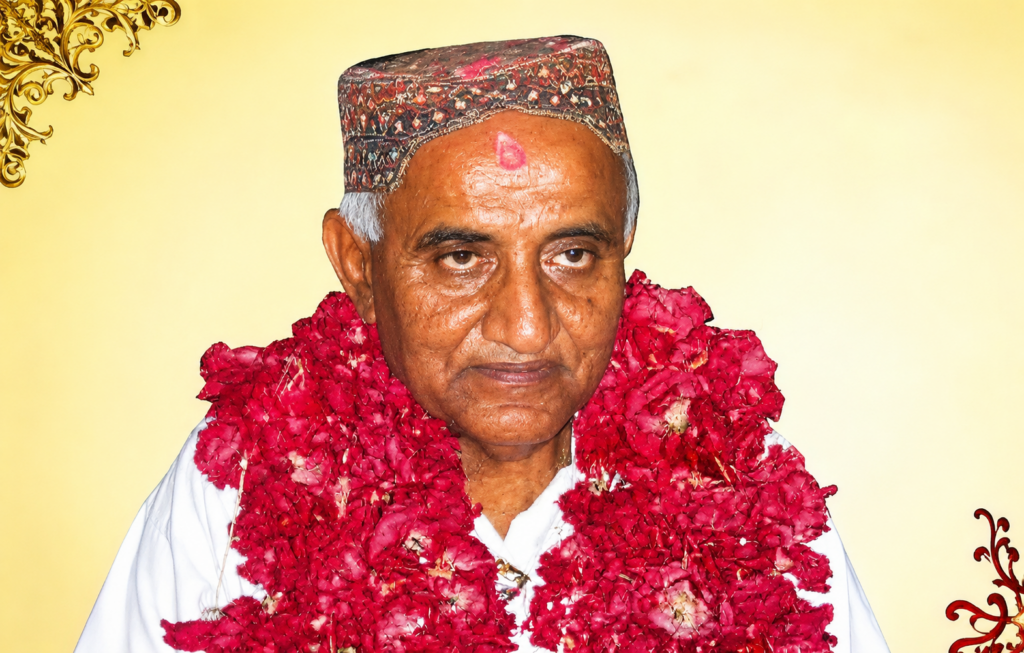
In the vast and rugged landscape of Thar, where sand dunes often swallow seeds of change, one name rises like an oasis of hope: Saeen Sachal Janjhi. Revered as a pioneer in education and a visionary community leader, Saeen Sachal didn’t just teach; he transformed. In a time and place where formal schooling was scarce, and awareness of education even scarcer, he stood firm as a torchbearer of knowledge. His contribution wasn’t confined to textbooks or classrooms; it extended to shaping minds, nurturing generations, and laying the bedrock for a brighter Thar. Among the few architects of Thar’s educational awakening, his name remains etched in golden letters.
Rooted in Humble Soil: Early Life and Education
Born on September 5, 1922, in the village of Janjhi, Taluka Chachro, Saeen Sachal was the son of Allah Dino Janjhi. From modest beginnings, he cultivated an insatiable thirst for learning. He began his early schooling in Kankhiyo and continued in Gul Muhammad Tar, both small villages where educational resources were limited. Despite the odds, he excelled, completing the Sindhi Final Examination in 1944. A year later, on October 1, 1945, he formally began his teaching profession, a calling that would define not just his life, but the destiny of his community.
As a father and leader, Saeen Sachal’s personal life was deeply interwoven with his mission. He raised two sons and a daughter, all of whom embodied the values he held dear. His elder son, Jam Saqi, became a prominent political activist and a courageous voice in Pakistan’s democratic and socialist movements, enduring imprisonment for his beliefs. His younger son, Dr. Muhammad Sultan, embraced service through medicine, earning respect as a compassionate pediatrician. His daughter, Marvi, carried forward her father’s educational legacy by becoming a teacher. When a girls’ school was opened in the village, he ensured she was the first to enroll, setting a powerful example in a society hesitant to educate daughters.
The Birth of Janjhi High School: A Legacy for Thousands
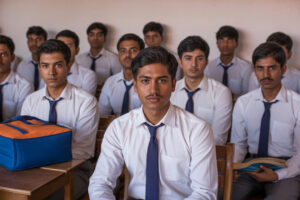
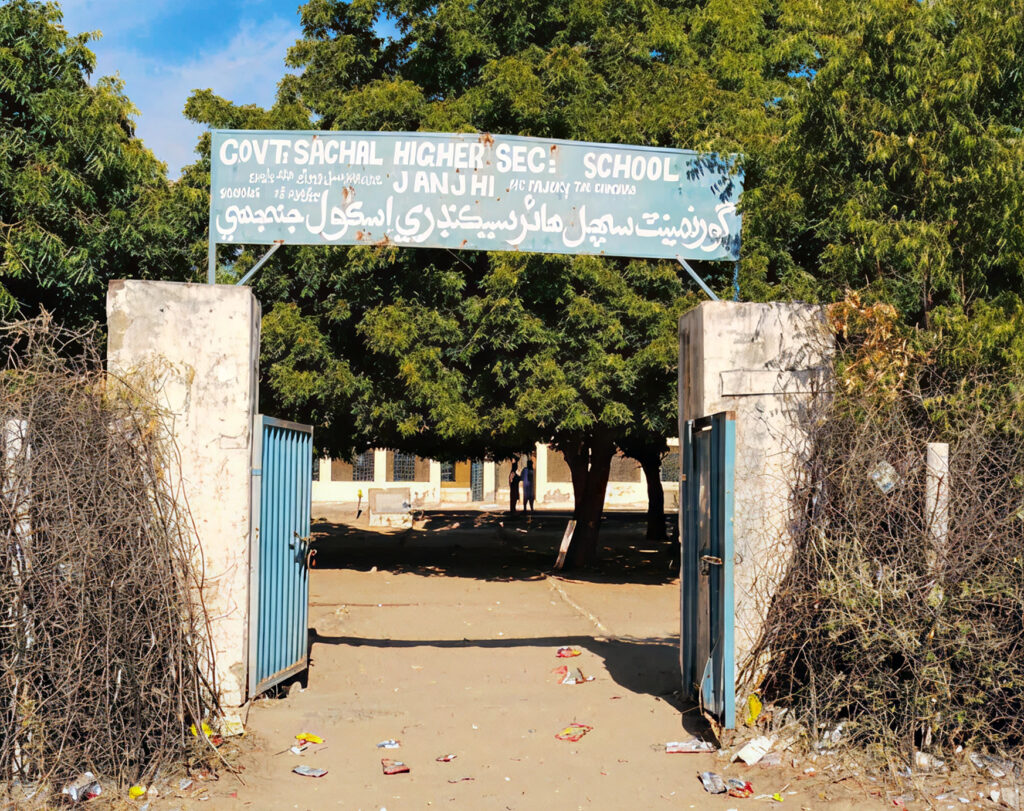
Among Saeen Sachal’s greatest legacies was the establishment and development of the Janjhi High School, a feat that changed the educational landscape of Thar. What began as a modest village school grew, under his guidance, into a vital institution that empowered thousands of families.
In 1960, he introduced English-language education, a bold step at the time. One of his early students, Sohail Sangi, is a senior journalist. In 1961, the school was upgraded to a middle school, and by 1974, it achieved branch high school status. Finally, in 1979, the Government of Sindh recognized its excellence and declared it a full high school. Yet, the journey was far from easy.
When a building was sanctioned, a major obstacle emerged: no one was willing to donate land for construction. The village’s influential figures backed away, suggesting the school be relocated. At this crucial moment, Saeen Sachal made a historic sacrifice. He announced: “I offer my ancestral land, Survey No. 44, for the school. I will transfer complete ownership to ensure it stays here, in Janjhi.”
This was his only immovable property, yet he gave it away freely for education, for the village, for the generations to come. Such selflessness is rare, and it defined the man he was.
A Community-Based Educational Model
Saeen Sachal’s brilliance wasn’t limited to classroom teaching. He was an innovator in community-based learning. According to Retired Head Master Naimatullah Janjhi, Saeen Sachal designed a cooperative hosting model: “Every household with enrolled children had to host an equal number of out-of-village students and treat them as their own, sharing food, shelter, and care.” For those who couldn’t find hosts, Saeen Sachal opened his own home.
His wife, Meehan Bai, cooked and cared for them. His commitment extended beyond academics: he supervised their well-being, arranged their admissions to colleges, and, with the help of donors, supported poor students pursuing professional education.
A Visionary Educator and Son of the Soil, Saeen Sachal Janjhi
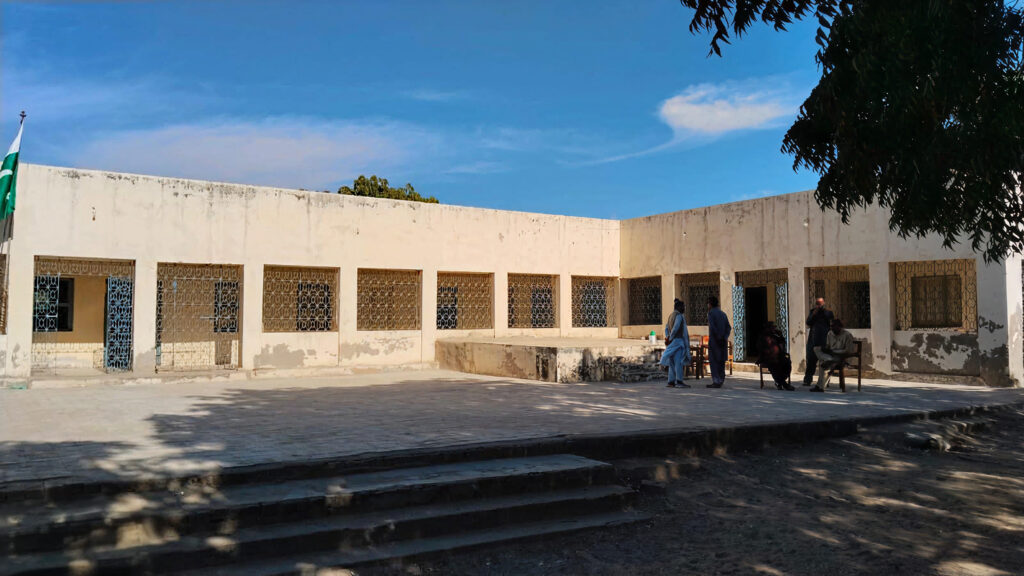
This government high school building stands as a symbol of dedication and sacrifice by a true visionary and son of Tharparkar—Saeen Sachal Janjhi. Unlike many other government educational buildings constructed on state-owned land, this particular school was built on land personally donated by Saeen Sachal himself.
His selfless act laid the foundation for a bright future for thousands of students. Generations have received their education from Government High School Janjhi, and today its alumni serve in respectable positions across Pakistan and even abroad, earning their livelihood and contributing to society with dignity. Saeen Sachal’s contribution is more than a building—it is a legacy of hope, knowledge, and transformation.
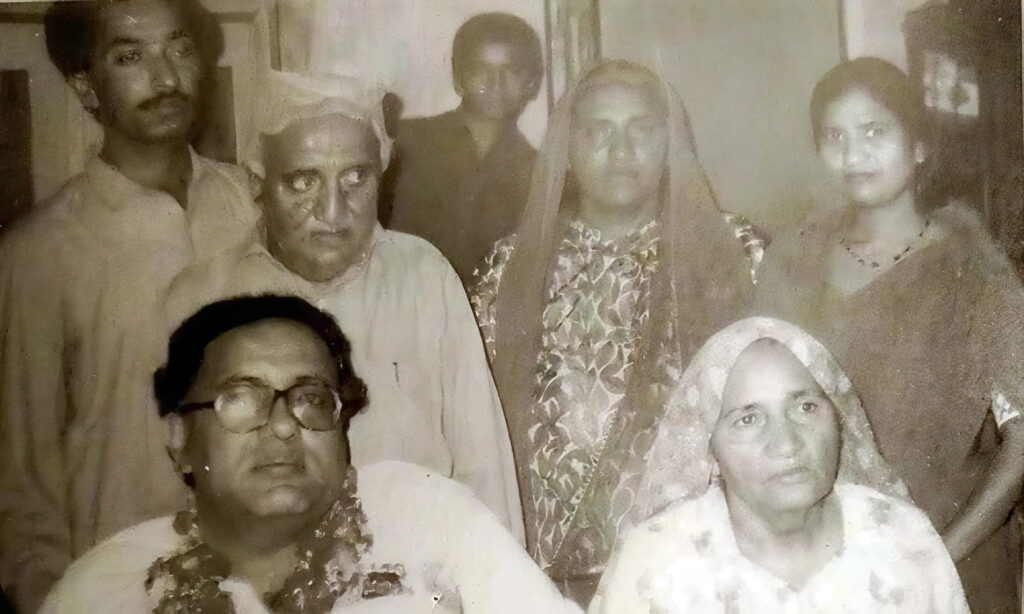
Jam Saqi with his father Mohmand Sachal, mother Mehi Bai, sister Marvi, and brother Sultan. [Photo from Ahmed Saleem and Nuzhat Abbas’ biography of Jam Saqi]
Enduring Challenges, Unshaken Resolve
Despite his unmatched service, political interference led to frequent and unfair transfers. At first, he was transferred by Chaudhry Inayatullah to Arif Kaka Primary School in Hyderabad, and later to Jarrar Thebo in Tando Allahyar. Through each upheaval, he remained composed and focused.
When his son Jam Saqi was jailed, Sachal assumed full responsibility for his grandchildren. He raised them lovingly. Today, Sajjad Zaheer is an engineer, and Bakhtawar is a doctor, living testament to their grandfather’s unwavering strength and vision. Even in the most difficult times, he demonstrated unshaken resolve. While many broke under pressure or turned bitter, this quiet fakir stayed resolute, walking the path of service without seeking reward.
He passed away peacefully on Saturday, December 31, 1991. His final resting place is in the Baban Shah graveyard in Hyderabad.
Legacy Beyond the Grave
Today, Saeen Sachal Janjhi’s legacy lives on in the halls of the Janjhi High School, in the lives of his students, in the values his children uphold, and in the dreams he helped shape.
He wasn’t just a teacher.
He was a movement.
He was the rain that fell on barren land.
And through his efforts, Thar bloomed.
Disclaimer: Any opinions expressed in this article do not necessarily reflect the opinions of the Pakistan Education Review. This content is meant for informational purposes only.
About the Author:
Ali Nawaz Rahimoo is a social development professional and freelance writer. He can be reached at [email protected]