
Abstract
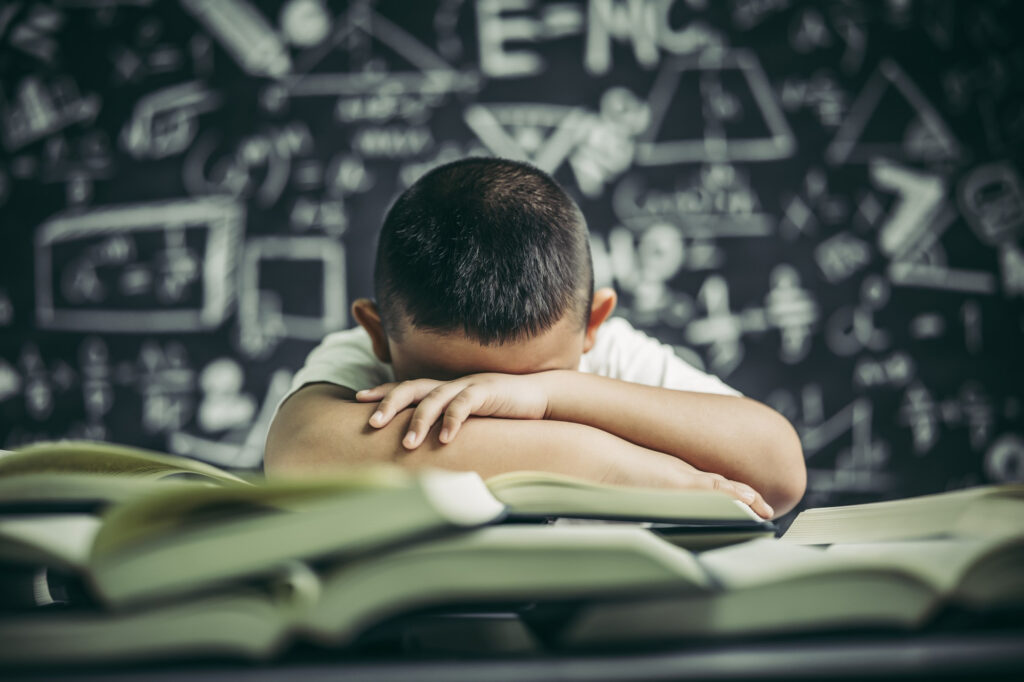
I am eleven years old, and I am already tired. Not tired from staying up late or running around. Tired from sitting in a classroom every day and feeling like the part of me that asks questions and wonders about things is being slowly switched off. This article is about that feeling, and about why it is not just mine. Pakistan’s education system, in both provincial boards like the Sindh Board and in the Cambridge system, is built on one idea: memorize, repeat, obey. This paper looks at how that idea damages children, creates a society divided by class, and is training an entire generation for a future that artificial intelligence is already taking over. It also looks at what a student can do to protect their own mind while still working within the system. This is not just a school problem. It is something that affects every Pakistani family, every dinner table, and every child who was ever told that asking questions is disrespectful or shut down mentally or physically. I think dinner tables are mostly for biryani though.
The System That Broke Us: Pakistan’s Education Crisis and the Minds It Buried
The Factory Model
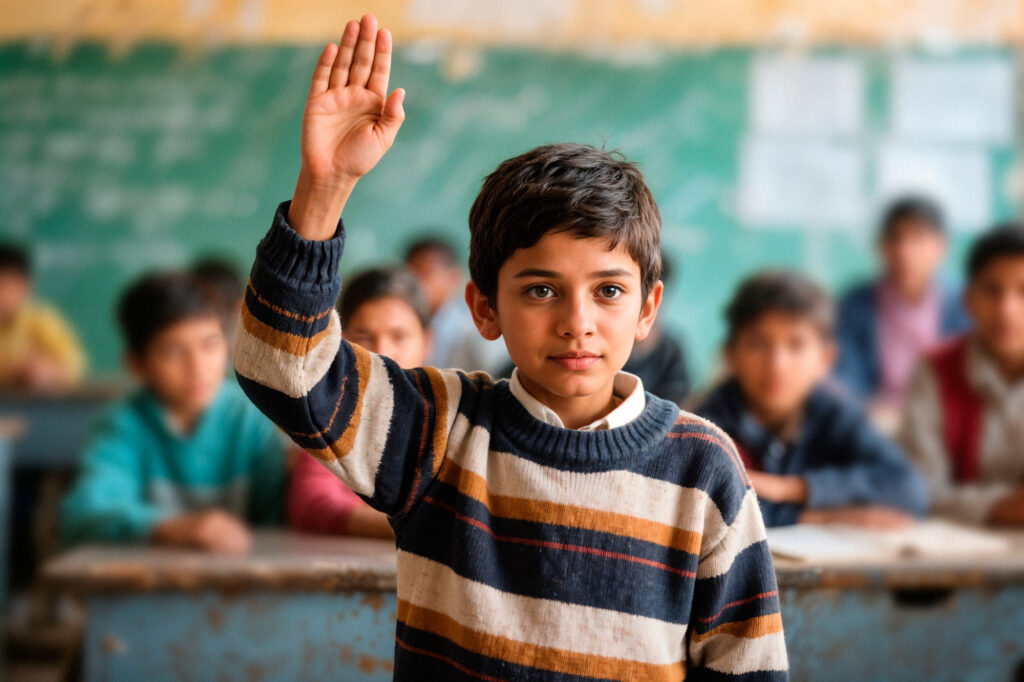
There is a moment that happens to almost every curious child in a Pakistani classroom. You raise your hand. You have a real question, not the kind the teacher asked for, but a real one that came from your own head. And for one second, you feel like school might actually be the place where thinking is supposed to happen. Then the teacher looks at you like you have done something wrong. That moment is not an accident. That moment is the system working exactly as it was designed. In 1968, two researchers named Dr. George Land and Dr. Beth Jarman did a study for NASA. They tested children aged three to five on creative thinking, and ninety-eight percent of them scored at the genius level. The same children were tested again at ten years old, and the number had dropped to thirty percent. By the time they were adults, it was two percent. Two percent. The researchers asked what happened between age five and adulthood, and the answer was school. I am eleven years old. I am a sixth grader. I am right in the middle of that drop. And I can feel it happening. It’s like a volume knob turning down on my soul, which is weird to say.
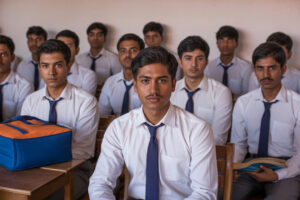
Most people think school was built to help children learn. But if you look at the history of how modern schooling was designed, a different picture comes out. In the early 1900s, an American oil businessman named John D. Rockefeller heavily funded the General Education Board in the United States. Rockefeller was an oil man and very rich. Rockefeller is widely reported to have said that he did not want a nation of thinkers. He wanted a nation of workers for his factories. He needed people who would sit still for hours, follow instructions without asking why, produce the same output as the person next to them, and never question who was in charge or what the rule book had not written. Now look at a Pakistani classroom. The bell rings, and children sit in rows. Rows are lines of desks. Talking is punished, even though communication is one of the most significant skills needed in the real world. Questions are sometimes treated as disrespect. The exam rewards the student who copies the textbook the most accurately. The student who writes a genuinely good answer in their own words can actually lose marks, because the examiner is looking for the exact phrasing from the official book. It is the same system. Just with different walls. The factory Rockefeller built needed quiet, obedient workers. The school system produces exactly that. What it does not produce is thinkers, builders, or people who can face a problem they have never seen before and figure out what to do. My uncle once got stuck because he lost the manual.
The Cost of Obedience
The school system does give some things, like structure and routine. Routine is doing the same stuff every day. It teaches basic reading, writing, and mathematics. It gives a certificate that most universities and employers will ask for. These things have real value, and this article is not pretending they do not. But the things it takes are bigger. The first thing it takes is curiosity. Children start school asking questions constantly. They want to know how everything works and why. School slowly replaces that question with a different one. The question is no longer “Why does this happen?” The question becomes “Will this be on the exam?” Those two questions lead to completely different lives. One is a life of adventure and the other is a life of just sitting on a chair.
The second thing it takes is the ability to trust yourself, and this one is personal. Once, I brought a lip gloss to school. It was not even colored. I was not trying to impress anyone. I was nine. I liked the way it felt because my lips were chapped. When a teacher noticed it, she did not quietly tell me it was against the rules. She called attention to it in front of the whole class and told me I was wearing it to impress boys. I was humiliated in front of everyone for something so small and so normal. I did not feel corrected; I felt ashamed of myself. Author and researcher Brené Brown has studied shame and its effects on people for decades. She writes that shame does not teach people how to do better; it teaches them that they are not good enough. That is what that classroom moment did. It did not explain a school rule. It told me that my own instincts and choices were dangerous and wrong. When that message comes from a teacher, repeated in different forms over years of school, children stop trusting their own judgment entirely. They start waiting to be told what to think. And that’s where independent thinking drops. It’s a very messy situation.
The Two Tracks of Pakistan
Another time, I smuggled my phone into school inside a packet of crisps, because I knew there would be a bag check that day. A bag check is when they look in your stuff. When they found it, I was screamed at and made to feel like I had done something terrible. But here is what I actually did: I saw a problem, thought of a creative solution, planned ahead, and executed it under pressure. In any other context, that would be called smart. In school, it was called a disgrace. The third thing school takes is the safety to ask real questions. In a science class once, a classmate asked about fungal infections during a lesson about fungi. It was a completely connected, logical question. The teacher’s response was to ask the student where exactly they saw that in the textbook, and to shame them in front of the class for asking something that was not on the syllabus. A student reached out toward real learning, and the school slapped their hand away. This happens way too much.

Pakistan has two main education tracks. One is the provincial board system, which includes boards like the Sindh Board and the Punjab Board. The other is the Cambridge International system, which uses a British curriculum and is used by private schools. Most people talk about these as if they are just two different academic options. They are not. They function as a class divider dressed up as an education choice. The Sindh Board has serious, documented problems. Exam papers have been leaked on social media before tests even begin, which means that some students cheat and some do not, but all receive the same certificate. Textbooks are outdated by decades. A ninth-grade computer science book that still teaches concepts from the 1990s is not preparing students for technology. It is preparing them for a museum. Most damaging of all is the marking system. A student who writes an accurate, thoughtful answer in their own words can be penalized if it does not match the exact phrasing in the official textbook. Originality is not rewarded. Copying is. It’s just a copying game.
The Cambridge system has its own problems that people talk about less. Because the Pakistani Rupee keeps losing value, the registration fees for Cambridge exams, which are priced in British Pounds, keep becoming more expensive for Pakistani families. Students sometimes sit for three difficult exams in one day. In recent years, math and computer science papers were leaked on social media and had to be canceled, leaving students with no result and no clarity about university applications. There is also the IBCC conversion issue, where the formula used to convert Cambridge grades for Pakistani university admissions historically deducts marks. This means students who paid more money and studied a harder curriculum are actually placed at a disadvantage compared to students from local boards when they apply to Pakistani universities. What this system actually creates is a division. Cambridge-educated students, mostly from wealthier families, are prepared for international universities and often leave Pakistan entirely. Local board students are prepared to work inside Pakistan, often for the very class of people that Cambridge produced. The school system is not giving everyone equal access to opportunity. It is sorting people into their futures before they are old enough to choose. It’s like a race that’s rigged.
Rote Learning and the AI Threat
The single biggest failure inside both systems is the same one: memorization is treated as learning. A student who can recite the definition of photosynthesis perfectly but cannot explain why a farmer’s crops grow differently depending on the season has not actually learned anything useful. Photosynthesis is how plants eat light. A student who has memorized the definition of inflation but cannot understand their own family’s grocery bill has wasted years on a word. Educational researcher Benjamin Bloom created a framework showing that memorizing facts is actually the lowest level of thinking. Above it are understanding, applying, analyzing, creating, and evaluating. In my own observation, some kids in my class still do not know the basics of the world; for example, they’ll know the main contenders in WW1, but if you ask them which two countries are currently at war, they’ll be blank. Pakistan’s exam system is almost entirely focused on testing students on facts and definitions, not on whether they can do anything with that knowledge. Or be aware of their surroundings. I think everyone should look at the news even if it is boring.
In every Pakistani classroom, there are two types of students. The teacher’s pet sits in the front, memorizes everything, gets high marks, and builds their whole self-worth around the teacher’s approval. The school loves them. The troublemaker talks too much, asks inconvenient questions, gets punished, and is told they will never amount to anything. The school is exhausted by them. Researcher Karen Arnold at Boston University spent decades tracking high school valedictorians, and her findings were intimidating. While they became stable, productive professionals, not even one went on to become a creator, leader, or someone who changed how people think about the world. They became excellent at following a path. None of them built a new one. A separate study tracked students who were labeled rule-breakers in school, and those students grew up to be the highest earners in their age groups. Not because breaking rules is a good thing on its own. But because the qualities that made them difficult in a rigid classroom, like being comfortable with risk, not needing approval from authority figures, and being willing to try something that might fail, are the same qualities that the real world rewards. It means that the traits school punishes are often the ones the world needs most. I got into trouble once for a messy desk.
If you follow the path that the Pakistani education system lays out for you perfectly, you get into the rat race. You study hard, get good grades, and get a job with a salary. You start spending money to match the life you feel you are now supposed to have. You take on expenses, and now you cannot quit the job because the expenses will not stop. This is called the rat race. Robert Kiyosaki, who wrote Rich Dad Poor Dad, describes it as a trap built on one central mistake: people are taught to work for money, but never taught to make money work for them. Nobody in twelve years of Pakistani schooling will teach you the world around you, or the latest skills actually needed to rule the world. Psychologists call another part of this trap the hedonic treadmill. When you get something new, you feel happy for a little while, then the new thing becomes normal, and you need the next thing to feel happy again. Schools, by ranking children against each other from the age of five, build exactly the psychology that keeps the treadmill running for life. It’s like a machine you can’t get off of.
Right now, in 2026, artificial intelligence tools can write a textbook-perfect answer to any Sindh Board examination question in seconds. They can recite definitions and solve template problems faster than any human memorizer alive. What Pakistan’s education system has spent years training children to do—memorize and reproduce information—is now something a computer program does better, for free. The jobs that used to absorb rote-learning graduates are already being replaced by automation. The students graduating right now are entering a job market where their main skill is the one machines have already taken over. What AI still cannot do well is be genuinely human or make real creative connections. These are the capacities that years of rote learning have been slowly switching off in Pakistani children. The system is producing exactly what the economy is eliminating.
The Struggle at Home and the Rebel Path
For many students, the fight is at home. My parents are boxed in a system of marks and ranks. First position in class. Ninety percent and above. These carry the weight of a family’s dreams and fear for the future, and that weight lands on a child. When a creative, curious child is stuck in a loop where everyone keeps telling them again and again that too many questions mean disrespect and talking back, they slowly stop sharing ideas and become compressed. This article is not saying you should drop out of school, because that removes the future that opens doors. The answer is to understand the system for what it is—a game—and to play it just enough to get the paper at the end, while fiercely protecting your own mind outside of school hours. Learn how to manage money. Learn how to communicate and persuade. Learn how to fail at something small and keep going, because that skill is worth more than any exam grade. Richard Branson and Warren Buffett have both noted that qualifications are useful but can trap you into playing it safe. They are both rich, so they must know.
There is a real difference between a destructive rebel and a constructive rebel. A destructive rebel breaks rules because they are angry, but a constructive rebel understands the rules and uses them strategically to build something better on the other side. The child who can’t sit still at his desk, the one who can’t stop talking, the one who doesn’t tie their hair up in a pony, the one who challenges the rules instead of blindly following them: those children are not the problem. They are the ones the world is going to need. Pakistan’s education system is not broken by accident; it was designed to produce quiet, compliant people who will slot into their assigned positions. It is not enough anymore. The creative children being silenced are the exact people Pakistan needs most. Albert Einstein is often quoted as saying that everybody is a genius, but if you judge a fish by its ability to climb a tree, it will spend its whole life believing it is stupid. Pakistan’s schools are full of fish being graded on tree-climbing. It is time to put them back in the water. I hope the water is warm and has no sharks.
Disclaimer: Any opinions expressed in this article do not necessarily reflect the opinions of the Pakistan Education Review. This content is meant for informational purposes only.

About the Author:
Husna Rehan is an 11-year-old student in Grade 6 at St. Michael’s Convent School, Karachi.